To choose a wool blanket, look past the photos and check five things: what it's made of, how much it weighs for its size, how its dimensions fit your couch or bed, what the care label asks of you, and how easily you can send it back. Fiber predicts softness, weight per square yard predicts warmth, and size decides where the blanket actually gets used. Edges, certification and origin fill in the rest.
For a couch throw, that usually adds up to merino or a merino blend: soft enough for bare arms, big enough to cover you from shoulders to feet, dense enough to feel substantial, with a care routine you can live with and a return window long enough to judge the feel at home. Below, each point is checked against the real figures of our own merino throws, with a checklist at the end.
Fiber: read the content label first
In the US, a textile label has to list the fibers by name with their percentage of the total weight, largest share first. It's the most honest description of a blanket you'll get. A throw sold as a "wool blend" can hold much less wool than the name suggests, so read the numbers.
What you're likely to see:
- Wool: sheep's wool of any breed. It's warm and hard-wearing but can be coarse, and coarse wool can feel scratchy on bare skin.
- Merino wool: wool from merino sheep, much finer than ordinary wool. Fine fibers bend when they touch your skin instead of prickling, which is why merino feels soft.
- Cashmere: the fine undercoat of cashmere goats, softer than merino and more expensive. In throws it's usually blended with wool, so check that the label tells you how much cashmere is in it.
- Nylon, polyester, acrylic: synthetic fibers. A moderate share of nylon strengthens a wool yarn; a large share of polyester or acrylic makes a blanket cheaper and less like wool.
If a seller gives the fiber diameter in microns, a lower number means finer and softer. Our merino throws are 80% merino wool and 20% nylon: the merino brings the warmth and softness, and the nylon strengthens the yarn and helps the throw keep its shape.
Weight and density: how warm it will feel
Two blankets of the same size can weigh very different amounts. More wool per square yard usually means a denser blanket that feels warmer and heavier and drapes more; less means lighter and airier. Few listings print this figure, but you can work it out from the size and the weight:
- Metric: the weight in grams divided by the area in square meters gives grams per square meter (g/m², often written GSM, as on towels).
- US units: the weight in ounces divided by the area in square yards gives ounces per square yard. For the area, multiply width by length in inches and divide by 1,296.
Take our 51 × 67 in (130 × 170 cm) merino throw: it weighs 890 g (about 2 lb) and covers 2.21 m², which works out at about 400 g/m², or about 12 oz per square yard. Here are all three of our merino sizes:
| Merino throw | Weight | Finish | Weight per area (calculated, without fringes) |
|---|---|---|---|
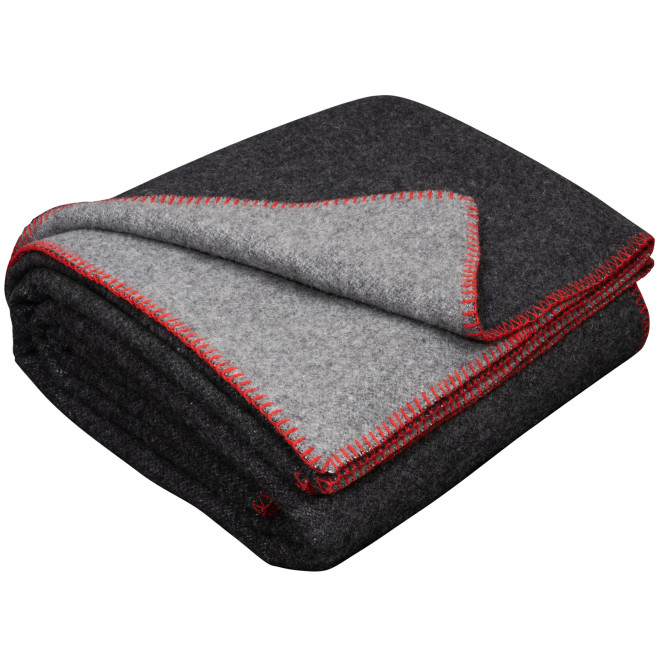
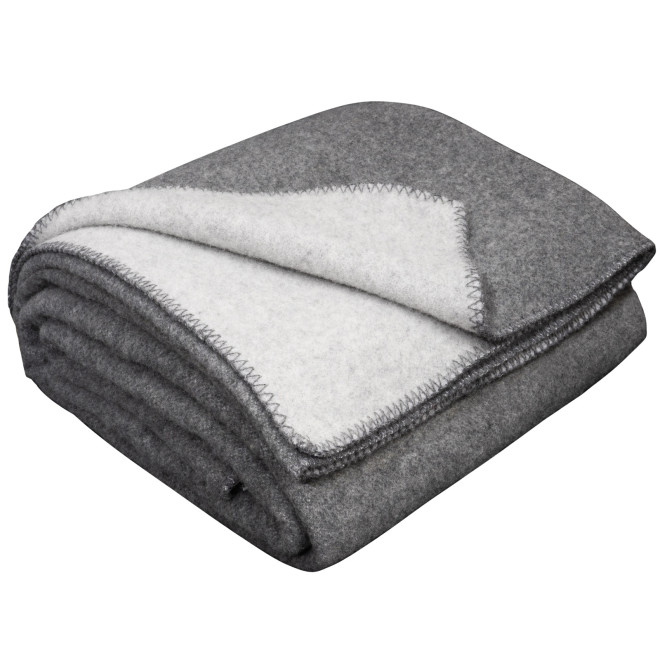
| 51 × 67 in (130 × 170 cm) | 890 g (about 2 lb) | double-sided | about 400 g/m² (12 oz/sq yd) |
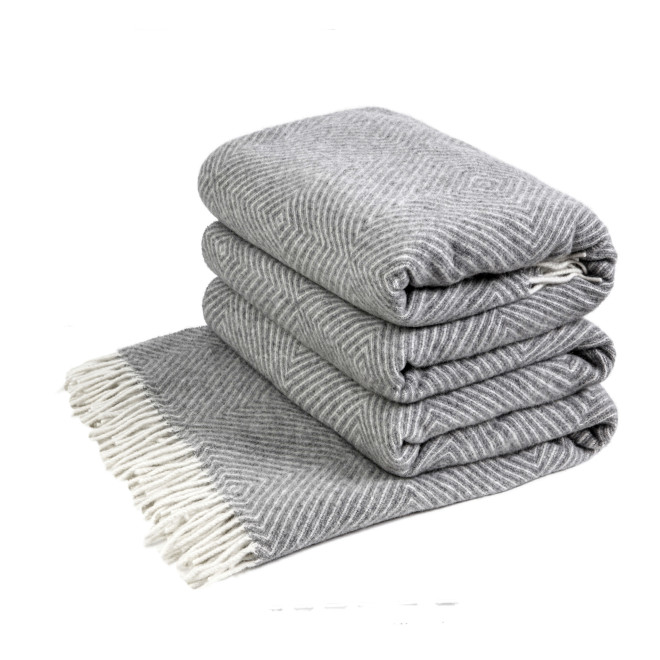
| 55 × 79 in (140 × 200 cm), including fringes | 730 g (about 1.6 lb) | patterned, fringes of 2–4 in (5–10 cm) | about 270–290 g/m² (8–8.5 oz/sq yd) |
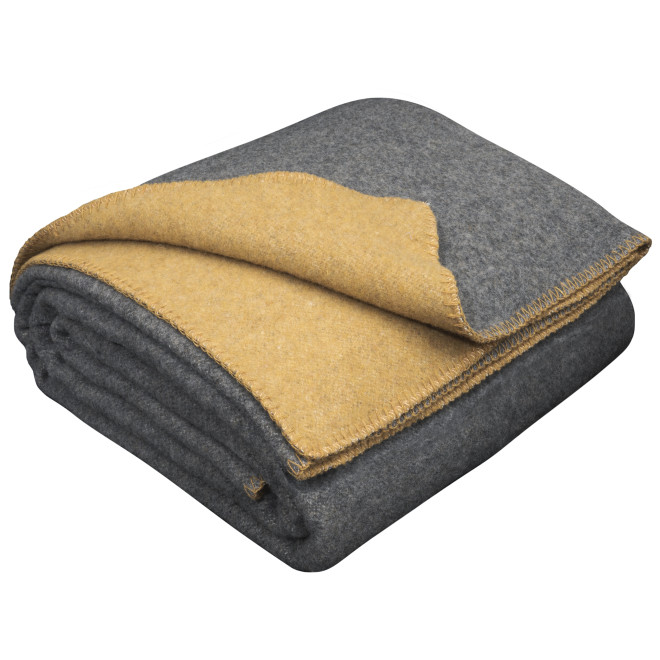
| 59 × 85 in (150 × 215 cm) | 1,450 g (about 3.2 lb) | double-sided | about 450 g/m² (13 oz/sq yd) |
The fringed throw is the lightest per square yard and easy to carry from room to room; the two double-sided throws are far denser and have real heft. We rate the merino line 4 out of 5 for warmth on our own scale. Heavier isn't automatically better, though: a blanket that's just right on a cold night can be too much in a heated living room.
Size: couch throw or bed blanket
Measure what the blanket has to cover. On a couch, that's you: shoulders to feet, sitting up or stretched out. On a bed, it's the top of the mattress plus however much you want hanging over the sides. For reference, standard US mattresses are 38 × 75 in (twin), 54 × 75 in (full), 60 × 80 in (queen) and 76 × 80 in (king).
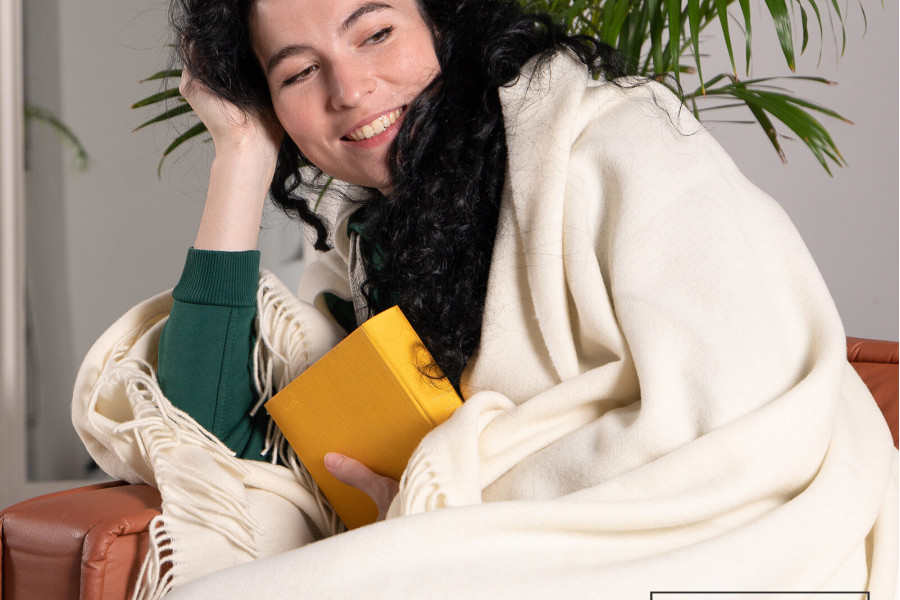
- 51 × 67 in (130 × 170 cm): one person on the couch, sitting or curled up. It folds neatly over an armrest.
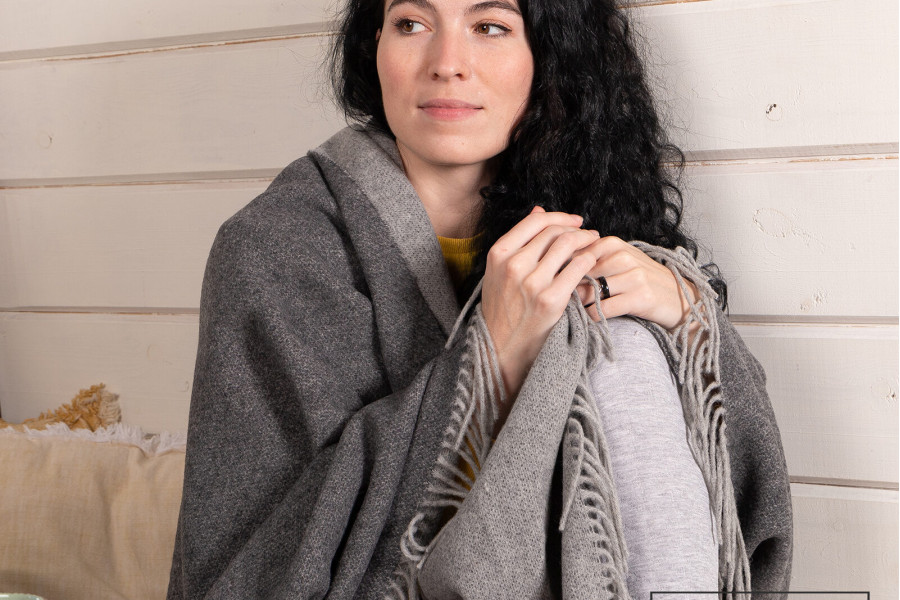
- 55 × 79 in (140 × 200 cm): long enough to cover an adult lying down, or two people sharing it sitting up. The length includes the fringes, so the woven part is a few inches shorter.
- 59 × 85 in (150 × 215 cm): covers a twin mattress with about 10 in to spare on each side. On a queen or king it works as an extra layer across the bed or at its foot, not as a blanket that hangs down both sides.
Our throws are sized for couches, twin beds and layering; for a blanket that drapes over the sides of a queen or king, look for one sold in that bed size.
Edges, fringes and the care label
Look at the edges up close, in person or in zoomed-in photos: they should be straight and even, with no loose loops, gaps or puckered stitching. With fringes, check that the listing says if the stated size includes them, and that the ends are twisted or knotted, which holds them together better than loose threads. Cats and vacuum cleaners like fringes too.
Then read the care label: it tells you what living with the blanket will be like. Wool stays fresh for a long time, and many wool blankets aren't meant for the washer. Our merino throws say do not wash: you air them outdoors for a few hours, out of direct sun and rain, and have them dry cleaned when they really need it. Our guide on how to wash a wool blanket covers airing, spot cleaning and what to know if you wash one anyway. If you need a machine-washable blanket, look for a label that says so; such wool is usually specially treated so it doesn't felt.
OEKO-TEX®, origin and returns
OEKO-TEX®: this certification means the textile has been tested for harmful substances by an independent institute. It says nothing about softness or warmth, but it's a useful baseline for a textile you'll use every day. Our throws are OEKO-TEX® certified.
Origin: US labels must also show the country of origin and who made or sells the product. The country tells you where the blanket was made, not where the sheep grazed. Ours are woven in Ukraine, in our family's own mill, and we have worked in textiles for more than 25 years.
Returns: softness is personal, and no photo can show it. Before you buy, check how long you have to return a blanket and who pays for the return shipping. On lyhome.us, shipping is free across the US from our warehouse in New Jersey, and our returns policy gives you 30 days to send a throw back. Return shipping is on you unless the throw arrived wrong or damaged, and refunds usually go out within 7 days of the throw reaching us.
Your wool blanket checklist
- Fiber content: percentages by weight on the label. How much of it is wool, and which wool?
- Cashmere: if the name says cashmere, the percentage should be stated.
- Weight for its size: work out g/m² or oz/sq yd. Denser means warmer and heavier.
- Size: measured against your couch or mattress, with or without the fringes.
- Edges and fringes: straight, even and secure.
- Care label: washable, or airing and dry cleaning? Pick the routine you'll actually follow.
- OEKO-TEX®: certified or not.
- Origin: the country of origin, and who made it.
- Returns: how many days, and who pays the return shipping.
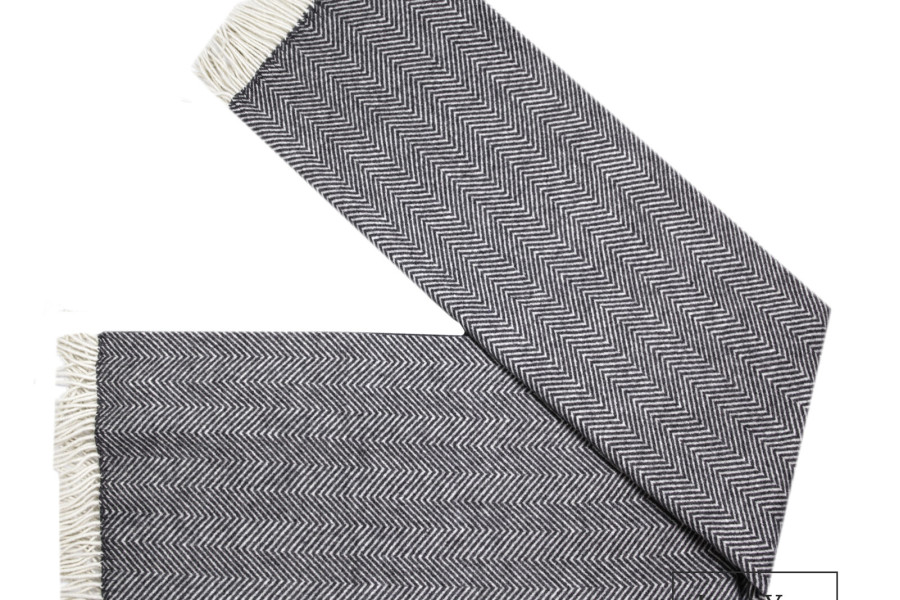
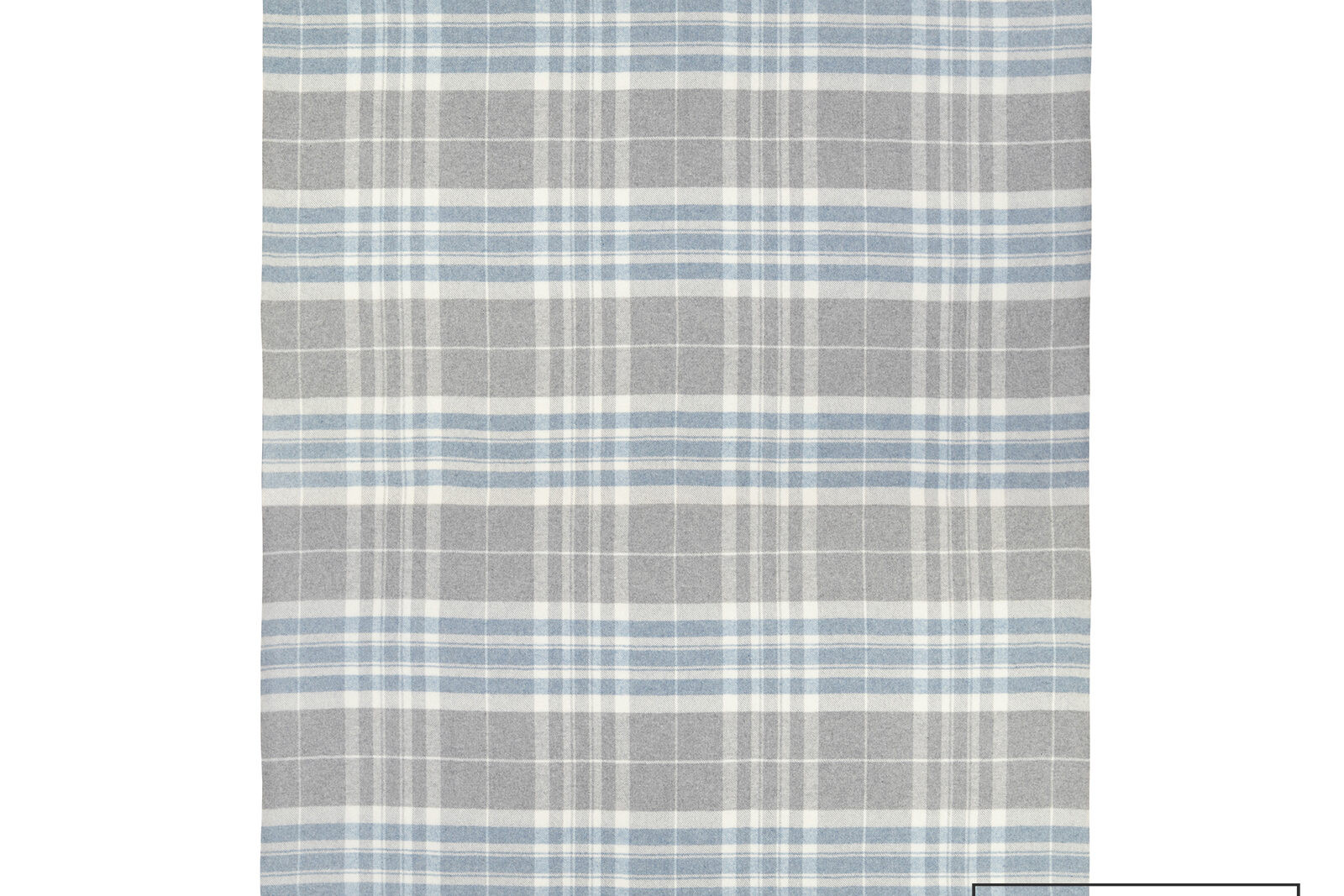
If our merino throws check your boxes, they come in the three sizes above, from $49.90 to $69.90, double-sided or in patterns such as chevron, diamonds and stripes. To compare them with our other materials, browse all our throws; in the US, merino is the line in stock right now.
FAQ
What is a good weight for a wool throw?
There's no single right number. Heavier and denser means warmer, with more drape; lighter means easier to carry and more comfortable in a heated room. For reference, our merino throws range from about 270 to 450 g/m² (8 to 13 oz/sq yd), calculated, without fringes.
Is merino better than regular wool for a blanket?
For softness, yes. Merino is finer, so it feels soft on bare skin, while ordinary wool is often coarser and can feel scratchy. Coarser wool has its fans, though: it's dense and very hard-wearing.
Are wool blankets itchy?
Coarse wool can be, because its thick fiber ends prickle instead of bending. Fine merino is much less likely to itch; if you're unsure, buy from a shop with a return window long enough to try it at home.
Can you wash a wool blanket?
Only if its care label allows it. Ours say do not wash: air them outdoors and have them dry cleaned when needed.