Fiber for fiber, alpaca is usually the warmer and the silkier of the two. Many alpaca fibers are partly hollow, so they trap air, and their smooth surface gives alpaca a sleek, almost slippery feel. Merino is the springier fiber: its tight crimp gives a blanket loft and stretch, it keeps its shape, and it takes up moisture from the air without feeling damp. A merino blanket also usually costs less than one in pure alpaca.
In a finished blanket, though, the fiber is only part of the answer. How thick and densely a blanket is woven decides most of its warmth, and the grade of the fiber decides most of its softness: fine merino can feel softer than coarse alpaca, and the other way around. Below you'll find the two fibers side by side, and what to check before you buy either one.
What alpaca is
Alpacas are South American relatives of the llama, raised mostly high in the Andes, and most of the world's alpaca fiber comes from Peru. There are two types: huacaya, with the dense, fluffy fleece most alpaca blankets are made from, and suri, with long, silky locks. Three things set alpaca apart from sheep's wool:
- No lanolin. Alpaca fleece contains none of the wax found in sheep's wool, so there is nothing greasy to wash out and no lanolin smell.
- Partly hollow fibers. Many alpaca fibers have a hollow or partly hollow core. The air inside adds insulation without adding weight.
- Smooth scales. Like all animal hair, alpaca is covered in tiny overlapping scales. They are flatter than on sheep's wool, which gives alpaca a silky feel and a soft sheen.
Alpaca also has less crimp than merino, so it is less elastic. Alpaca fabric drapes heavily and tends to stretch with use rather than spring back. Fineness varies a lot, from under 20 microns in the finest grades to over 30 in coarse ones (a micron is a thousandth of a millimeter). "Baby alpaca" is a fineness grade, usually around 22 microns or finer, not fleece from young animals. Lower grades can also contain coarse guard hairs that prickle.
What merino is
Merino is the wool of the merino sheep, one of the finest sheep's wools there is, and most of it now comes from Australia. Fine merino measures about 17 to 24 microns, and each fiber has a tight crimp, like a tiny spring.
That crimp is what makes merino feel lofty and bouncy. It holds still air, which is what insulates, and it lets the fabric stretch and recover, so a merino blanket keeps its shape. Merino also carries lanolin: most of it is washed out when the raw wool is scoured, but traces remain. And like all sheep's wool, merino can take up to about a third of its own weight in moisture vapor without feeling wet, so it stays comfortable when you warm up under it.
Alpaca vs. merino at a glance
| Alpaca | Merino | |
|---|---|---|
| Where it comes from | Alpacas, mostly in Peru | Merino sheep, mostly in Australia |
| Warmth | Very warm; partly hollow fibers trap air, so it is often warmer for its weight | Very warm; crimp holds still air, and it takes up moisture without feeling damp |
| Softness | Silky and smooth; fine grades are very soft, coarse grades can prickle | Soft and springy; fine grades hardly itch |
| Weight and drape | Dense and drapey; can stretch with use | Lofty and elastic; springs back into shape |
| Lanolin | None | Traces; a faint sheep smell when new or damp |
| Care | Can felt; usually hand wash cold or dry clean | Can felt; wool cycle if the label allows, otherwise dry clean |
| Typical price level | Higher for pure alpaca; blends cost less | Mid-range, with a wide spread |
Which is warmer, and which is softer?
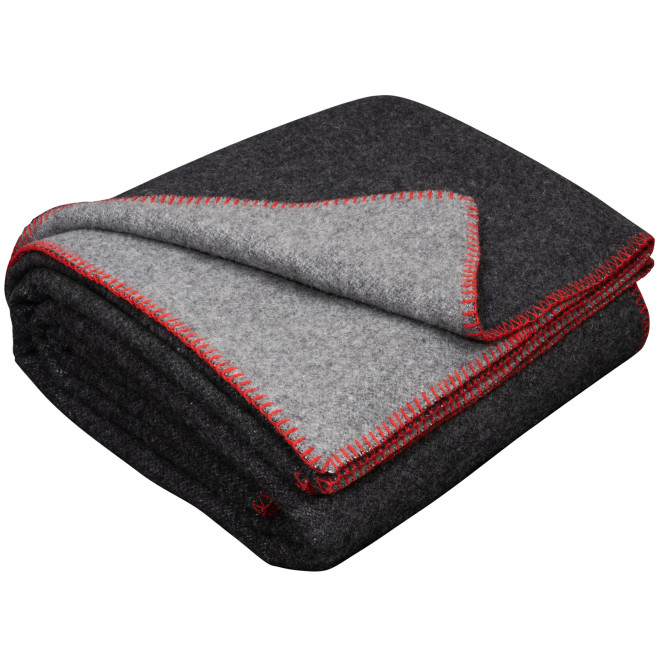
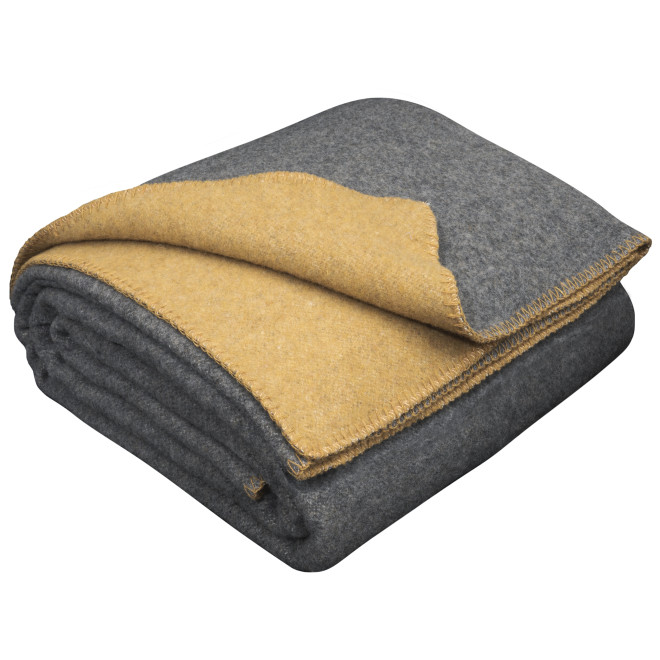
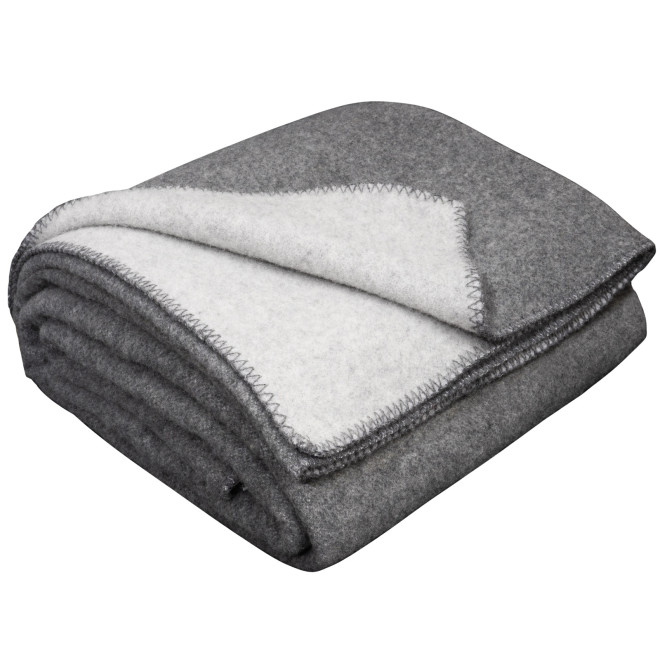
Warmth: weight for weight, alpaca usually has the edge, thanks to its partly hollow fibers. Merino answers with loft: its crimp holds a lot of still air, and because it takes up moisture, it feels less clammy when the room, or you, warm up. What you actually feel under a blanket, though, depends more on how it is made than on which animal the fiber came from. A dense, heavy merino blanket keeps you warmer than a thin, open-weave alpaca throw, so compare weight against size. Our double-sided merino throw in 51 × 67 in (130 × 170 cm) weighs 890 g (about 2 lb); the double-sided 59 × 85 in (150 × 215 cm) weighs 1,450 g (about 3.2 lb) and makes a warm extra layer on a bed.
Softness: the two are soft in different ways. Alpaca feels smooth and silky, because its flat scales let your hand glide over it. Merino feels bouncier and more like classic wool, with a slight texture under your palm. How much a blanket itches depends mostly on fineness: fiber ends thicker than about 30 microns don't bend when they meet the skin; they prickle. Fine merino and baby alpaca are both well below that, so both feel soft. The difference shows in cheaper blankets, where coarse alpaca with guard hairs can itch more than good merino. If a blanket feels scratchy, look at the fiber grade before you blame the animal.
Care and everyday wear
Both fibers are covered in scales, so both can felt and shrink with heat, water and rubbing. Alpaca blankets are usually labeled hand wash cold or dry clean. Washable merino goes on a wool cycle in cold water, and many merino blankets, ours included, are dry clean only. Either way, the care label on the item decides. Our guide on how to wash a wool blanket explains the symbols and the steps.
In daily use, merino's elasticity helps: a merino throw pulled over the arm of a sofa or tucked in at the foot of a bed springs back into shape. Alpaca drapes softly over a chair, but a heavy alpaca blanket can stretch and sag over time, and brushed alpaca sheds a fine halo of fibers. Both can pill a little where they rub, and a fabric shaver or a wool comb takes care of that.
Why we weave merino, not alpaca
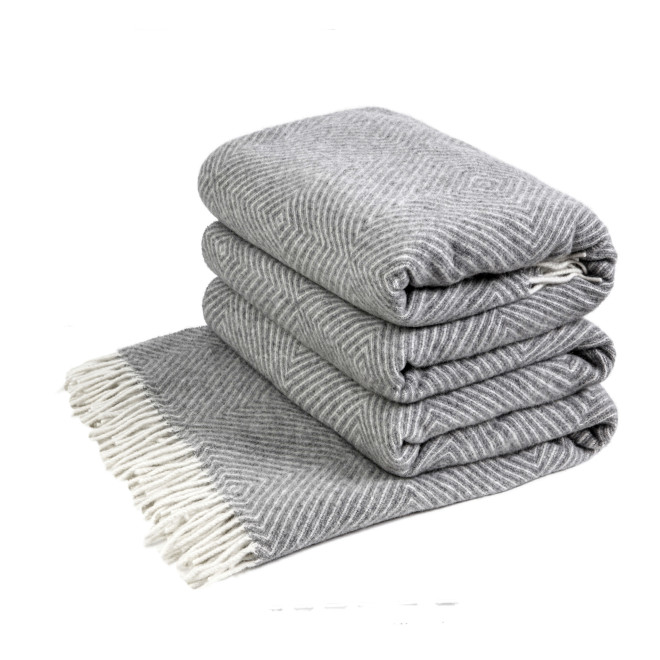
We don't sell alpaca. Our family has worked in textiles for more than 25 years, and in our own mill in Ukraine we weave merino, because it is soft, keeps its shape and costs less than pure alpaca. Our merino throws are 80% merino wool and 20% nylon; the nylon makes the fabric stronger and helps it hold its shape. They come in three sizes:
- 51 × 67 in (130 × 170 cm), double-sided, 890 g (about 2 lb)
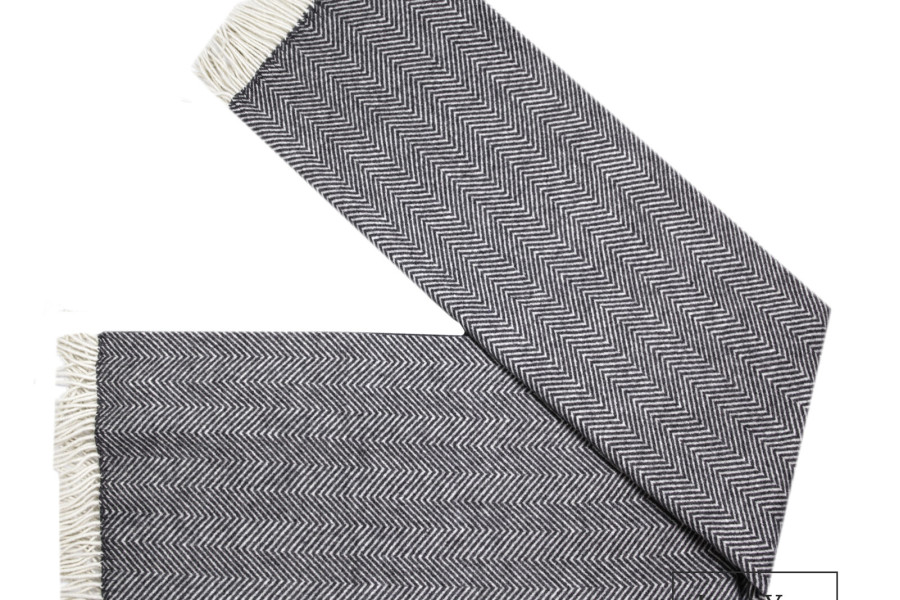
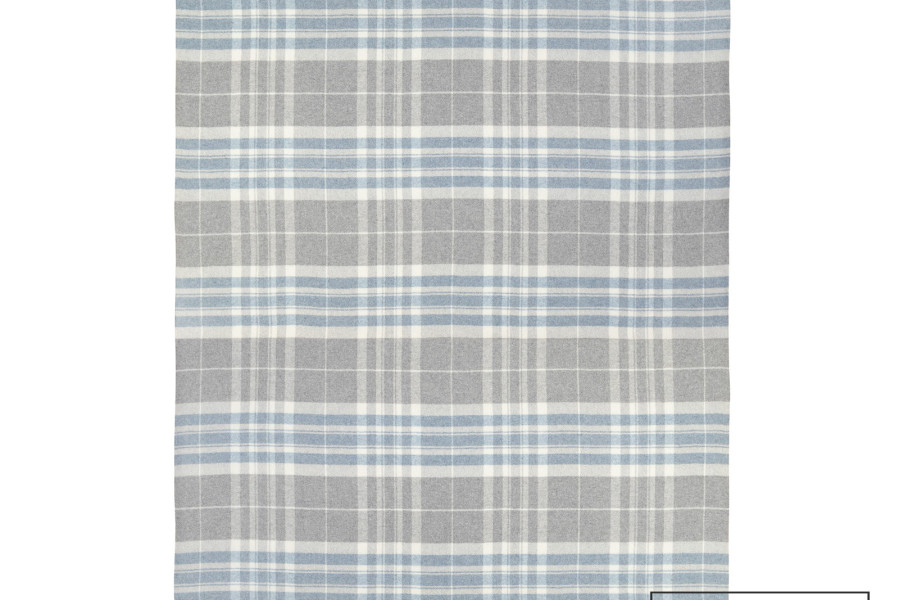
- 55 × 79 in (140 × 200 cm) including 2–4 in (5–10 cm) fringes, 730 g (about 1.6 lb), in patterns such as chevron, diamonds, squares, stripes and gradient squares
- 59 × 85 in (150 × 215 cm), double-sided, 1,450 g (about 3.2 lb)
Prices start at $49.90, every throw is OEKO-TEX® certified, and shipping is free across the US from our warehouse in New Jersey. On our own five-point scale, our merino rates 4 for softness and 4 for warmth. If you are also weighing cashmere or regular wool, our article on merino vs. cashmere vs. pure new wool compares them, including our cashmere blend of 90% merino and 10% cashmere.
FAQ
Is alpaca warmer than merino?
Weight for weight, usually yes, because many alpaca fibers are partly hollow. In a blanket, thickness and weave matter more: a dense merino blanket is warmer than a thin alpaca one.
Is alpaca or merino less itchy?
That depends on the grade more than the animal. Baby alpaca and fine merino both feel soft; coarse alpaca with guard hairs can prickle more than good merino.
Does alpaca have lanolin?
No. Alpaca fleece contains no lanolin. Merino does, though most of it is removed when the raw wool is scoured.
Do you sell alpaca blankets?
No. We weave merino in our own mill in Ukraine. Our merino throws start at $49.90, with free shipping across the US.