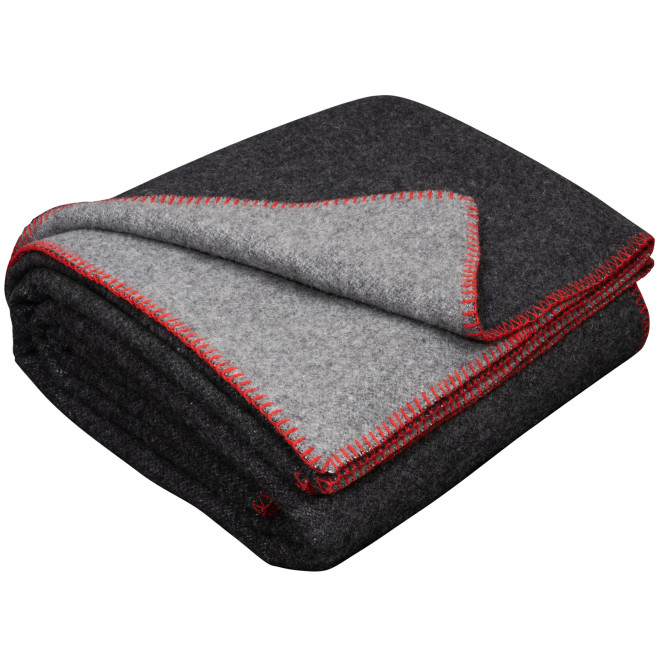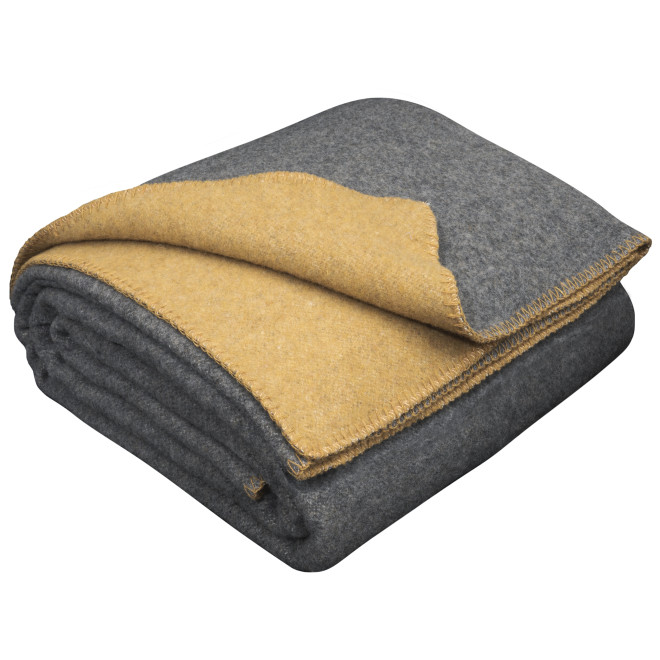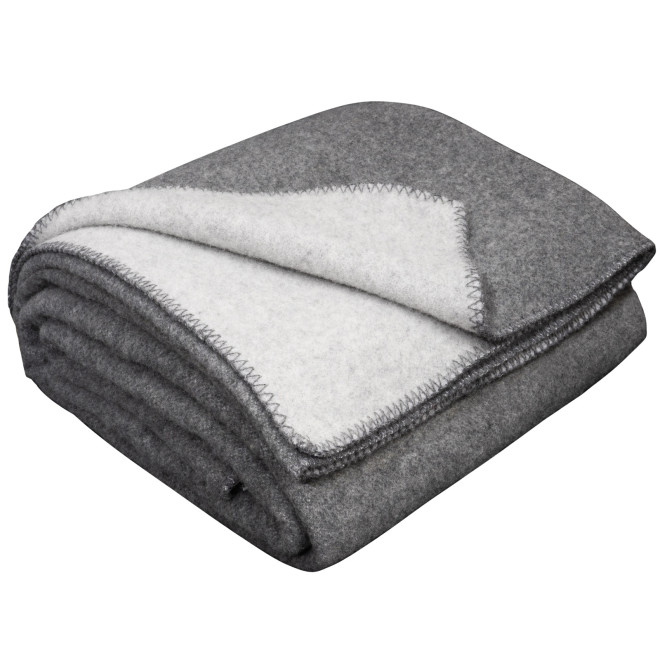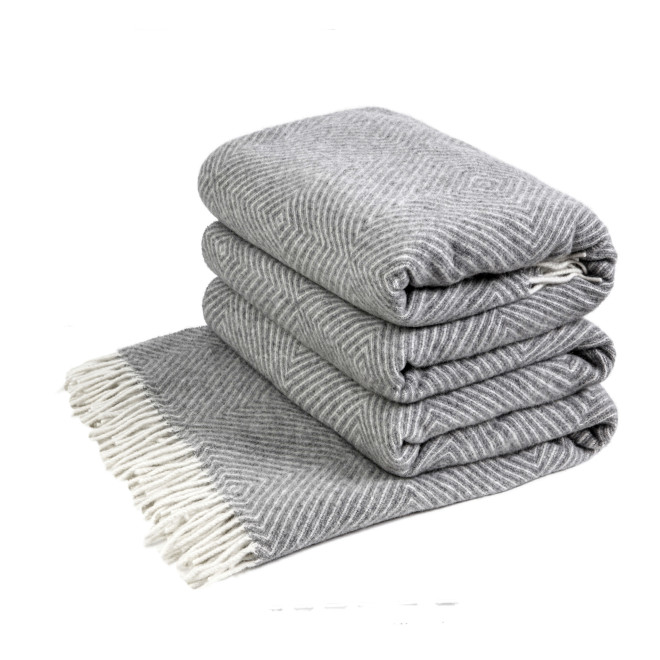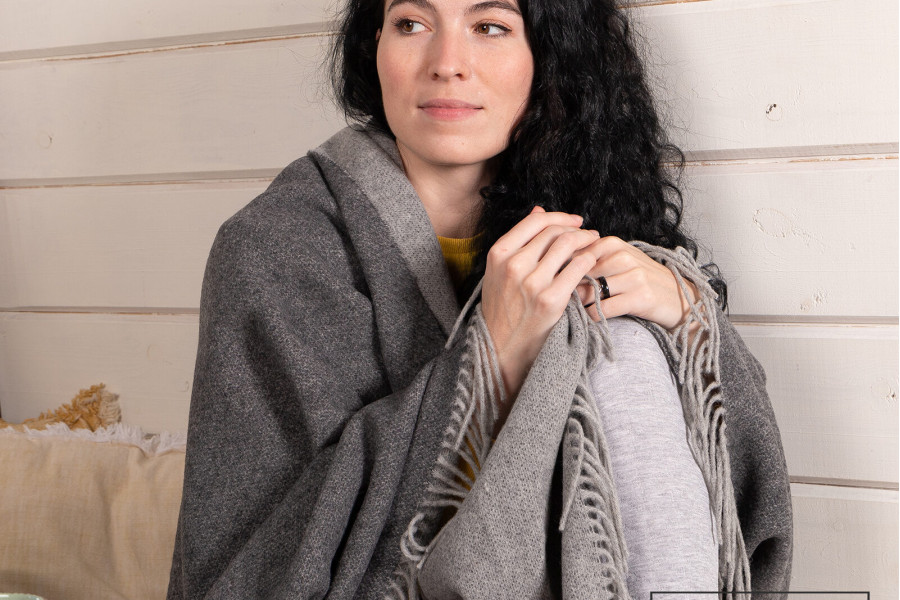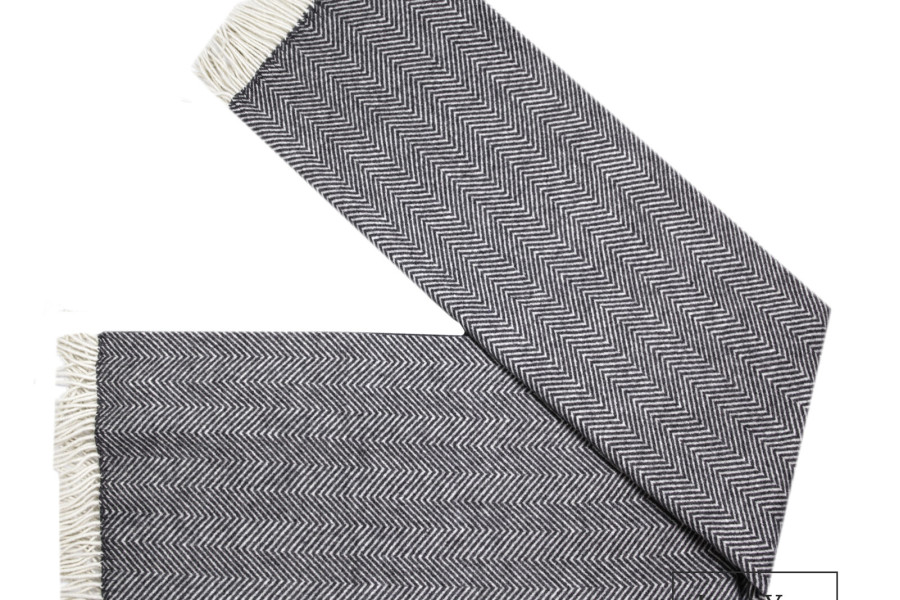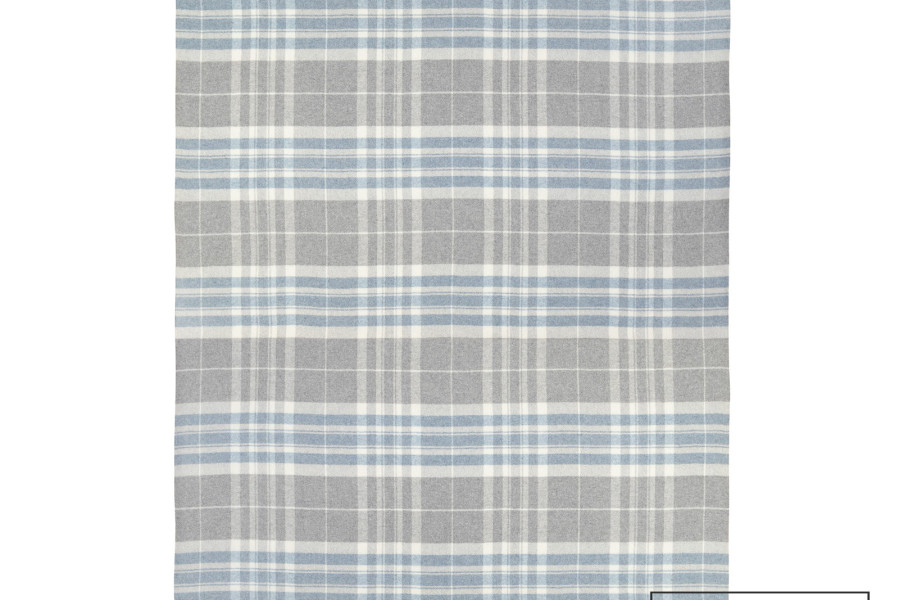
Merino, cashmere and pure new wool are all animal hair made of keratin, the same protein our own hair is made of. The difference you feel on your skin comes mostly from how fine the fiber is. Fineness is measured in microns, thousandths of a millimeter. For comparison, a human hair is roughly 50 to 100 microns thick.
The short version
- Cashmere is the finest and lightest of the three: very soft, but also delicate and expensive.
- Merino wool is fine and soft yet hard-wearing, the best all-rounder.
- Pure new wool tells you where the wool comes from, not how fine it is. It is often coarser, very durable and can itch on bare skin.
- How warm a throw is depends above all on how thick and dense it is woven.
Why some wool itches
The itch comes from the fiber ends. When they are thicker than about 30 microns, they do not bend away when they meet your skin; they prickle. The more of these thick fibers a fabric contains, the more likely it is to itch. Fine fibers such as cashmere and merino give way instead and feel soft.
Cashmere: the undercoat of the cashmere goat
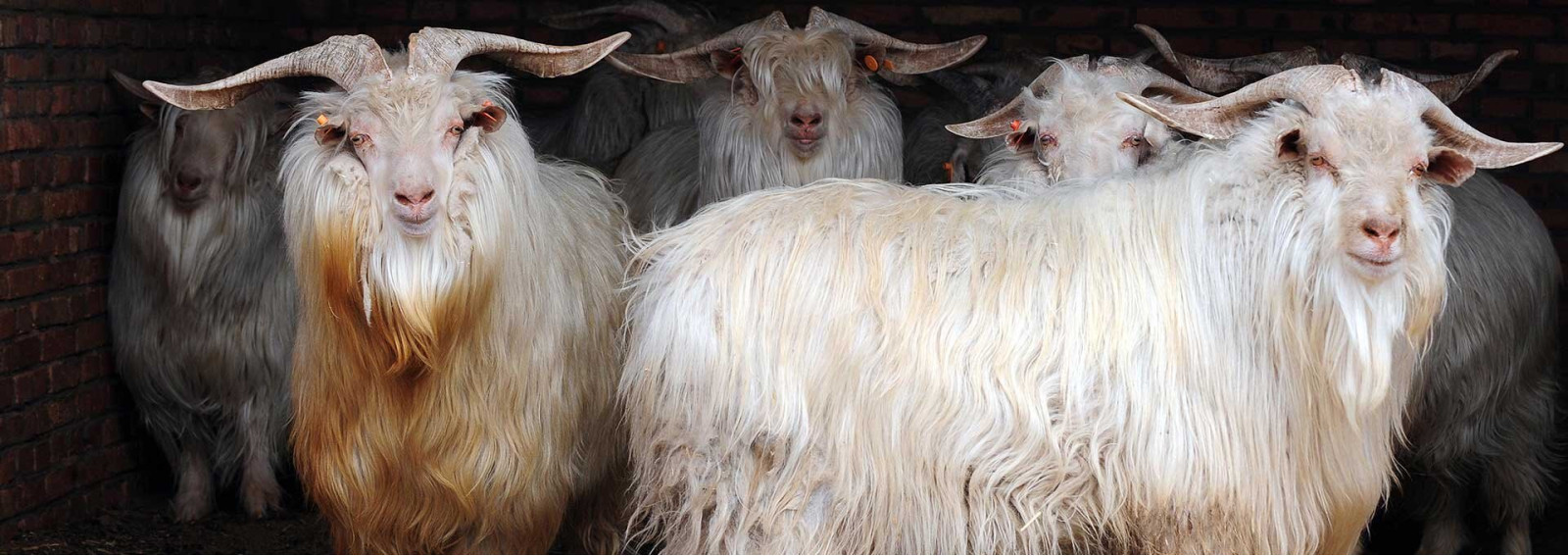
Cashmere comes from the fine undercoat of goats living in the cold highlands of Central Asia, above all in Mongolia and China. In spring, when the animals shed their winter coat, the undercoat is combed out. A goat yields only a few hundred grams a year, which is what makes cashmere so precious.
The fibers are usually 14 to 19 microns fine, so cashmere is exceptionally soft and warm for very little weight. The downside: the fine, short fibers are more delicate and pill more easily where they get a lot of wear.
Our cashmere throws are a blend of 10% cashmere and 90% fine merino wool. The cashmere softens the handle, the merino makes the throw durable and keeps the price reasonable. A 140 × 200 cm throw weighs about 655 grams.
Merino: fine, soft and hard-wearing
Merino wool comes from the merino sheep, whose wool is among the finest of all sheep's wool. Most of it now comes from Australia, with more from New Zealand and South Africa. Fine merino is around 17 to 24 microns, so it hardly itches, and its strongly crimped fiber makes it springy and keeps its shape.
Like all wool, merino takes up moisture without feeling wet, which evens out the climate under the throw. It hardly takes on smells.
Our merino throws are 80% merino wool and 20% nylon. The nylon makes the fabric stronger and helps it keep its shape. Depending on the model, they weigh between 730 and 1450 grams.
Pure new wool: the hard-wearing classic
"Pure new wool" is a regulated term: it may only be used for wool that has never been part of a finished product before, so no recycled wool. It means wool shorn from living sheep. The term says nothing about fineness. Pure new wool can come from many breeds of sheep and is often coarser than merino.
That has its advantages: coarser wool is very hard-wearing, has a crisp handle and feels especially warm in a dense throw. On bare skin it can itch, though; over a sweater or bedding, you will hardly notice.
Our pure new wool throws are woven from 100% New Zealand wool and weigh 730 to 890 grams.
And cotton?
Our cotton throws are a blend of 50% cotton, 30% polyester and 20% acrylic. They are less warm than wool but easy to care for: you can hand wash them at 30 °C (86 °F). That makes them right for children's rooms, summer evenings and anyone who does not get on with wool.
Which wool is the warmest?
Weight for weight, cashmere and fine merino are especially warm: their fine, crimped fibers trap a lot of still air, and still air insulates. In everyday use, though, what matters most is how thick and dense the throw is. A heavy pure new wool throw can therefore be warmer than a light cashmere one.
One advantage all wools share: they take up moisture, up to about a third of their weight, without feeling clammy. So they keep you warm even when you start to feel hot under the throw.
The fibers compared
| Cashmere | Merino | Pure new wool | |
|---|---|---|---|
| Source | Undercoat of the cashmere goat | Merino sheep | Sheep of many breeds |
| Fiber fineness | about 14–19 µm | about 17–24 µm | often 25 µm or more |
| On the skin | very soft | soft | crisp, can itch |
| Durability | delicate | hard-wearing | very hard-wearing |
| Price | high | medium | low to medium |
Our throws compared
-
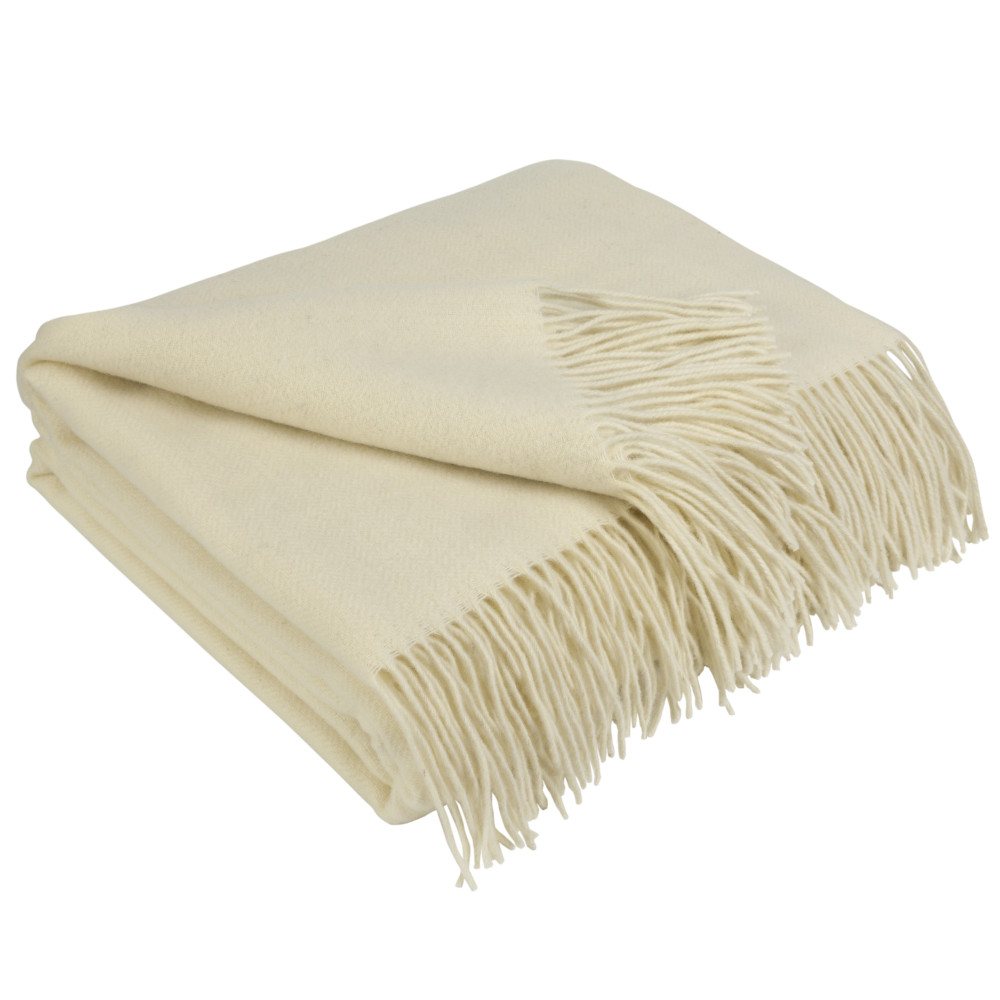 Cashmere blend
90% merino wool, 10% cashmere
Warmth
Softness
Weight655 g CareAir it out or dry-clean
For long evenings on the sofa
from $84.90 · 13 colorways
Discover
Cashmere blend
90% merino wool, 10% cashmere
Warmth
Softness
Weight655 g CareAir it out or dry-clean
For long evenings on the sofa
from $84.90 · 13 colorways
Discover
-
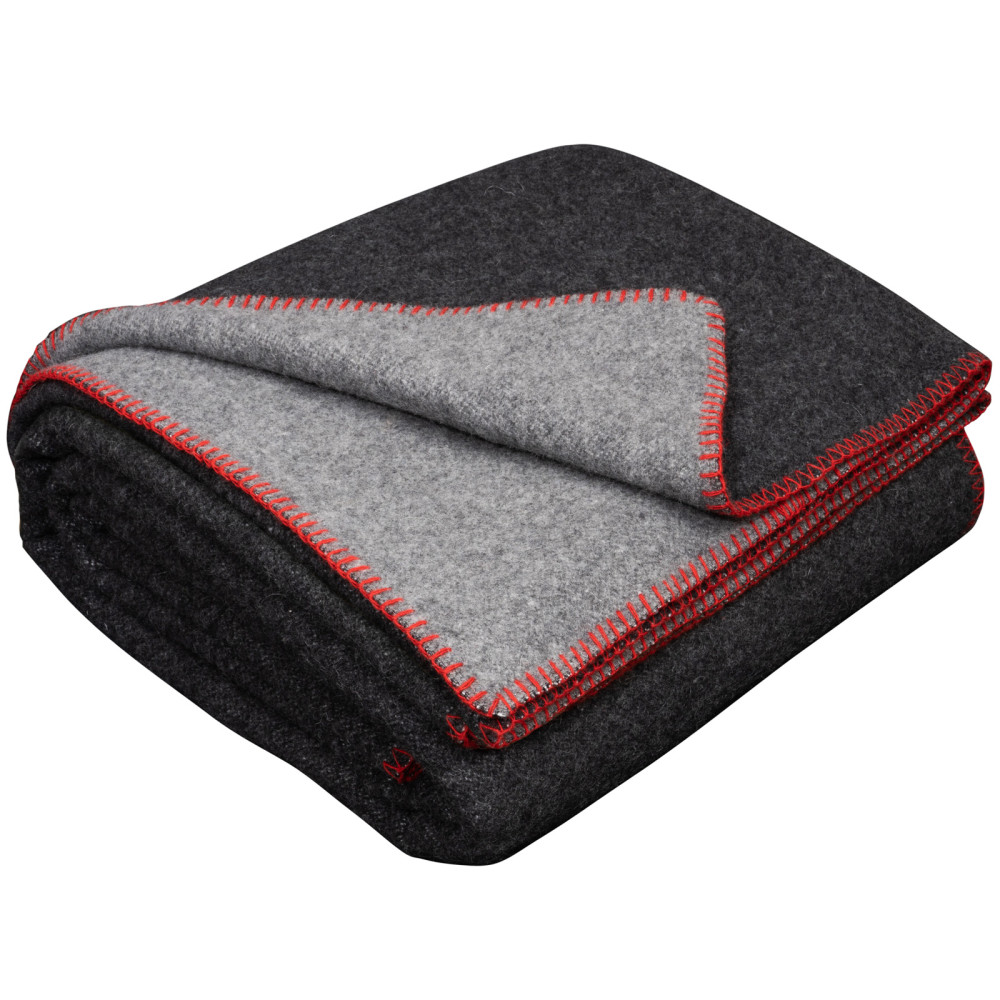 Merino wool
80% merino wool, 20% nylon
Warmth
Softness
Weight730–1,450 g CareAir it out or dry-clean
Light enough for travel and the car
from $49.90 · 30 colorways
Discover
Merino wool
80% merino wool, 20% nylon
Warmth
Softness
Weight730–1,450 g CareAir it out or dry-clean
Light enough for travel and the car
from $49.90 · 30 colorways
Discover
-
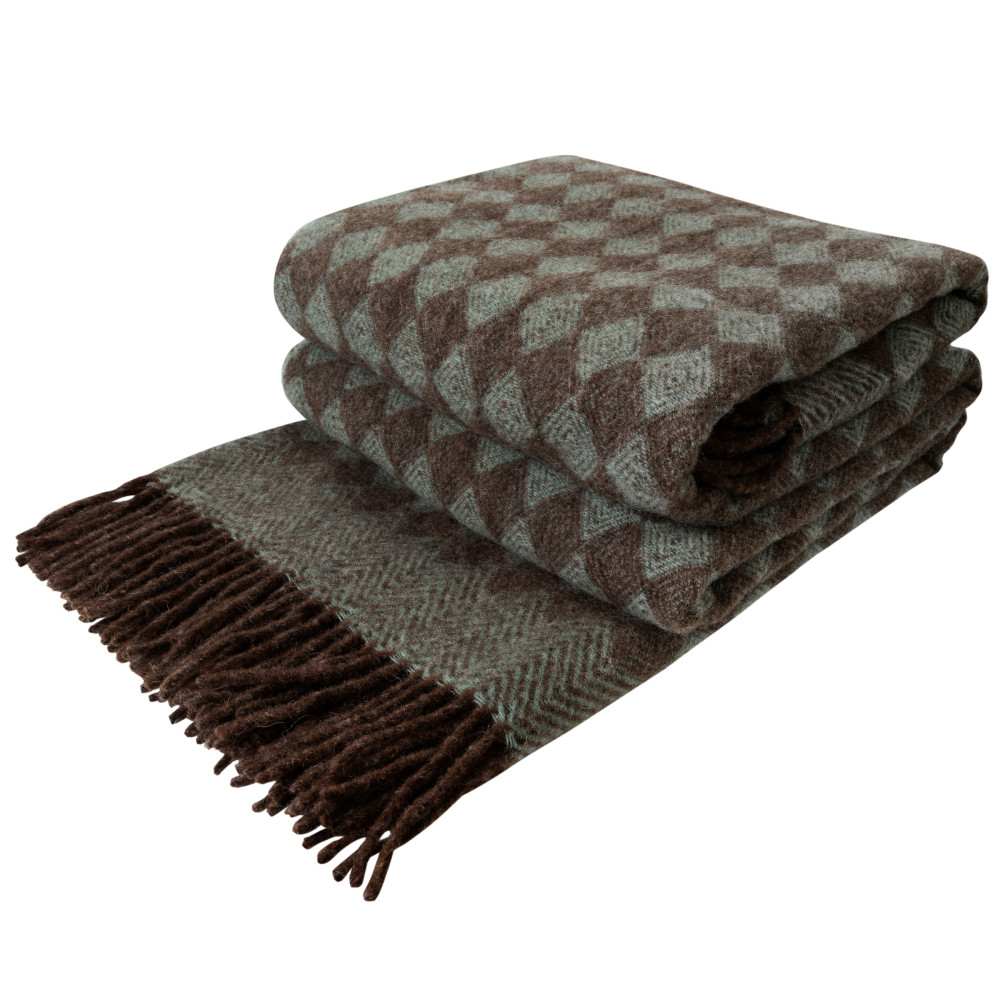 Pure new wool
100% New Zealand wool
Warmth
Softness
Weight730–890 g CareAir it out or dry-clean
Hard-wearing and winter-warm
from $49.90 · 4 colorways
Discover
Pure new wool
100% New Zealand wool
Warmth
Softness
Weight730–890 g CareAir it out or dry-clean
Hard-wearing and winter-warm
from $49.90 · 4 colorways
Discover
-
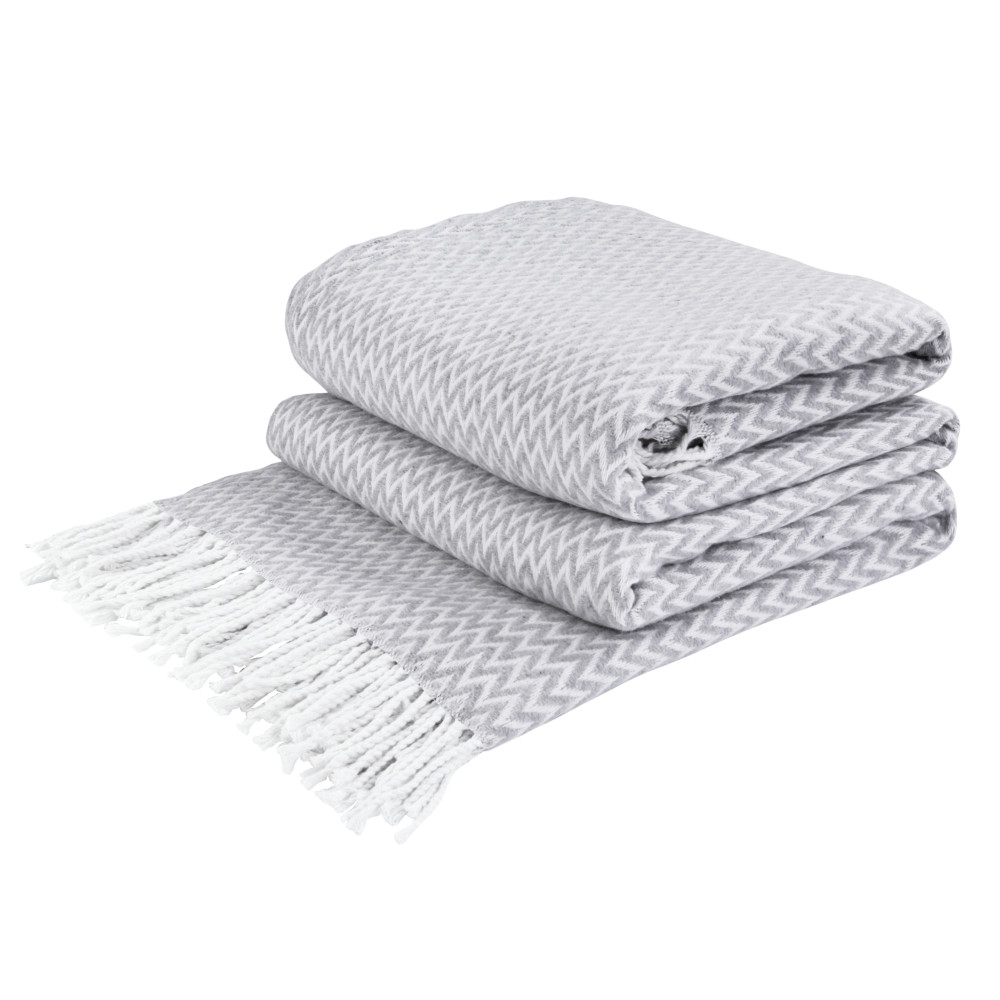 Cotton
50% cotton, 30% polyester, 20% acrylic
Warmth
Softness
Weight940–950 g CareHand wash at 30 °C (86 °F)
For every season, breathable
from $21.90 · 30 colorways
Discover
Cotton
50% cotton, 30% polyester, 20% acrylic
Warmth
Softness
Weight940–950 g CareHand wash at 30 °C (86 °F)
For every season, breathable
from $21.90 · 30 colorways
Discover
Which throw suits you?
- For sensitive skin and long evenings on the sofa: the cashmere blend or merino.
- For every day, for travel and the car: merino, light, soft and hard-wearing.
- For cold nights, cabins and the terrace: pure new wool, dense and durable.
- For every season and the children's room: the cotton blend, which you can wash by hand.
How to look after your throw so it stays soft for years is explained in our article How to wash a wool blanket.