
Yes, you can wash a merino wool blanket, as long as its care label allows washing. Use the wool or hand-wash cycle, cold water up to 86 °F (30 °C), a wool detergent without enzymes and a low spin, then lay the blanket flat to dry and keep it out of the dryer. Heat, rubbing and sudden changes in water temperature are what make wool felt and shrink, so every step below is about avoiding those three.
If the label shows a crossed-out washtub, as ours do, don't wash the blanket: air it out and have it dry cleaned when it needs a real clean. And if a blanket has already shrunk, you can try to relax it in lukewarm water with hair conditioner and gently stretch it back. That often wins back some of the lost size, but there is no guarantee, and wool that has truly felted will not go back.
Can you wash a wool blanket? Read the label first
The care label has the final word, because the same fiber can be woven and finished in ways that do or don't survive water. The symbols to look for:
- Washtub with dots or a number: machine washable. One dot, or the number 30, means cold water.
- Bars under the tub: one bar calls for a gentle cycle, two bars for the gentlest, such as delicates or wool.
- Washtub with a hand: hand wash only.
- Crossed-out washtub: do not wash.
- Circle with a P: professional dry cleaning.
- Crossed-out square with a circle inside: no dryer.
Merino labels vary. Some merino blankets are made for the washing machine; many, ours included, are dry clean only. The steps below are for merino and other woolens whose label clearly allows washing.
How to wash a merino blanket in the machine
- Check the fit. The blanket needs room to move. If it fills the drum, take it to a cleaner instead.
- Choose the wool or hand-wash cycle. It keeps the drum movement slow and gentle. If you have a top-loader with a center agitator, wash by hand instead: the agitator twists and rubs the blanket, and that is how wool felts.
- Set the water to cold, 86 °F (30 °C) at most, even if the label allows warmer.
- Use a wool detergent without enzymes. The enzymes in many regular detergents are designed to break down protein stains, and wool is a protein fiber. Skip bleach and fabric softener.
- Keep the spin low, around 600 to 800 rpm. The wool cycle usually sets this for you.
- Take the blanket out as soon as the cycle ends and dry it right away. Wet wool left bunched up in the drum creases and can start to smell musty.
How to hand wash a wool blanket in the tub
- Fill the tub with cool to lukewarm water, 86 °F (30 °C) at most, and dissolve the wool detergent in it.
- Lay the blanket in, press it under and let it soak for 10 to 15 minutes.
- Squeeze it gently through the water. Don't rub, scrub or wring it.
- Drain the tub and rinse the blanket in fresh water of the same temperature until no suds remain. A jump from warm to cold water can shock wool into felting.
- Press the water out with your hands, then roll the blanket up in large towels and press again.
A wet wool blanket is heavy. Lift it out in a bundle with both arms; picking it up by one edge stretches it.
How to dry a wool blanket
Lay it flat on a drying rack, or on a bed or clean floor covered with towels. Ease it back into its original shape and size, and turn it every few hours. A large blanket can take a day or two to dry all the way through; an open window or a fan in the room speeds that up. Keep it away from radiators, heaters and strong sun.
Unless the label clearly allows it, keep it out of the dryer, even on low heat. Heat and tumbling are exactly the conditions that felt wool, and one cycle can leave a blanket noticeably smaller and thicker. Don't hang it wet over a clothesline or a door, either: wet wool stretches under its own weight.
Shrank in the wash? How to try to unshrink a wool blanket
Wool shrinks in two ways. Sometimes the yarns, held under tension during weaving, relax in water and draw in, and the blanket comes out a little smaller but still soft and stretchy. That kind of shrinkage can often be partly reversed. Felting is different: warm water, soap and friction make the tiny scales on each fiber hook into each other, and the fabric turns thicker, stiffer and fuzzier, with a blurred pattern. Felted wool stays felted.
If your blanket is still soft and stretchy, try this:
- Fill a tub with lukewarm water, about 86 °F (30 °C), and mix in a generous squeeze of hair conditioner until the water feels slippery.
- Soak the blanket for about 30 minutes, pressing it under now and then. The conditioner coats the fibers so they slide past each other more easily.
- Press the water out without wringing, then roll the blanket in towels. Many people skip the rinse, so the conditioner keeps the fibers supple while the blanket dries.
- Lay it flat on dry towels and stretch it gently, a little at a time, lengthwise and crosswise, working from the center out. Don't tug hard at the edges or the fringe.
- As it dries, check the size, ease it out again and turn it.
- If it is still too small, repeat once.
Be realistic about the result. A lightly shrunk blanket often gains back part of its size; a felted one will not, however long it soaks.
Our merino throws: air them, dry clean them
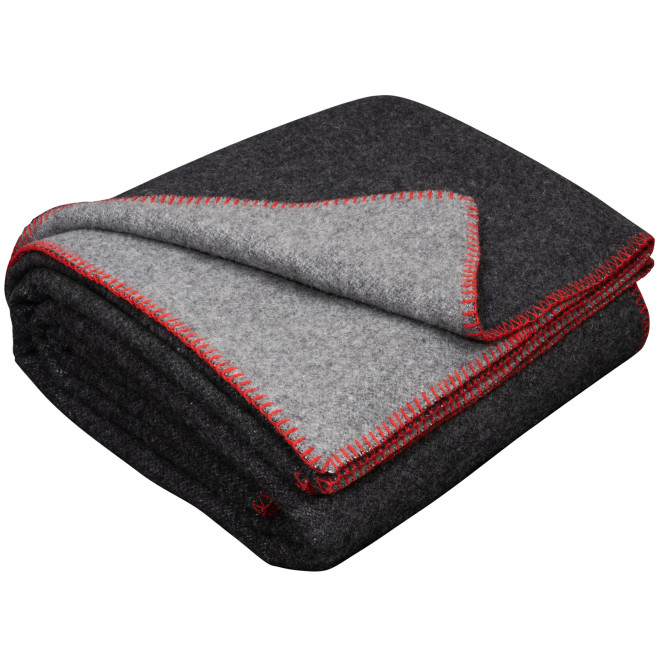
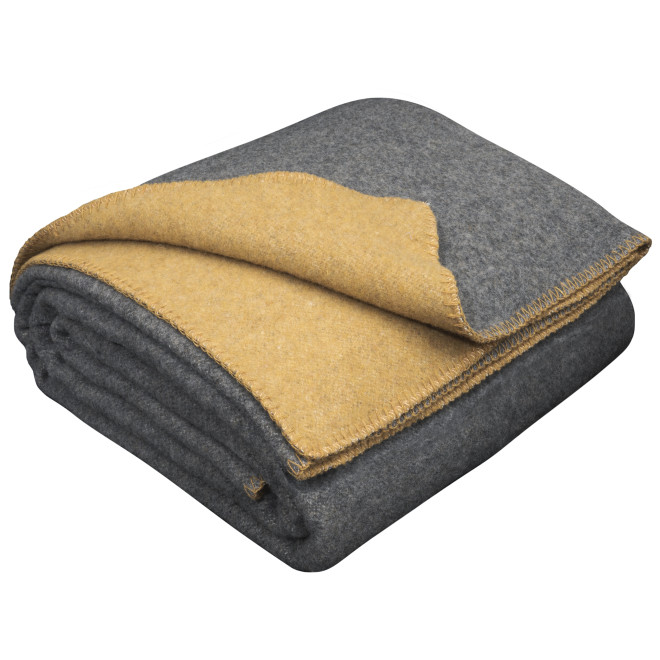
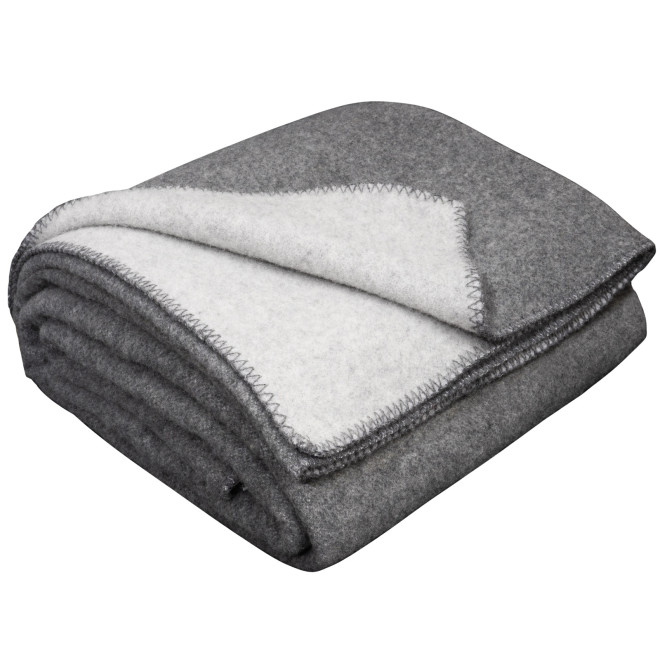
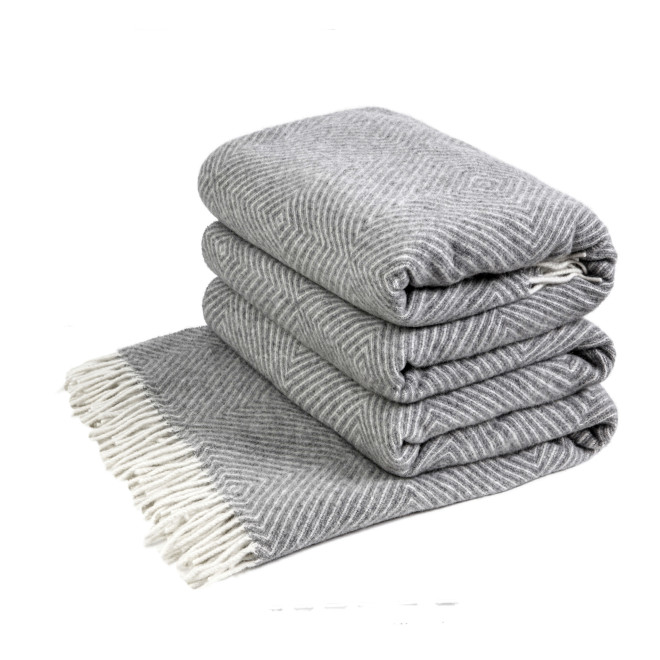
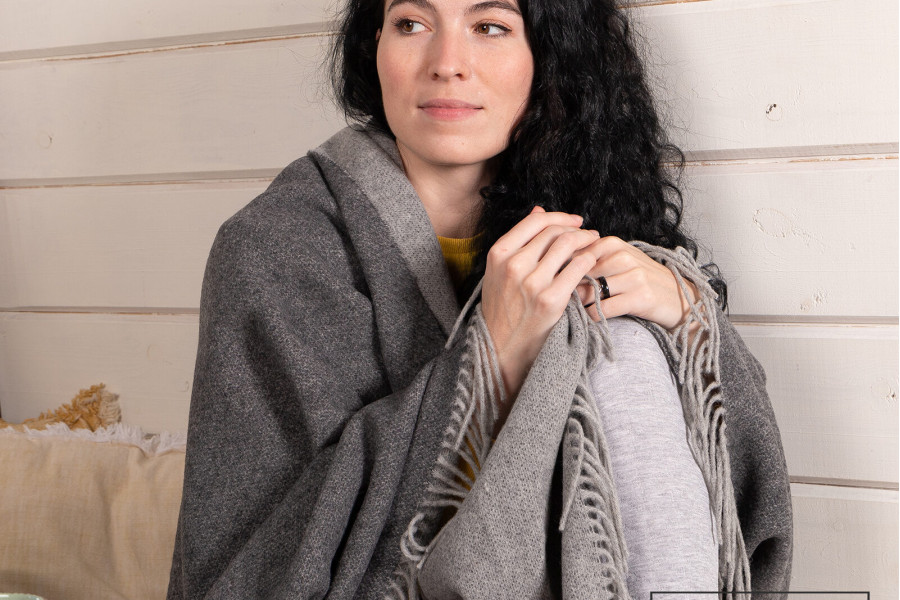
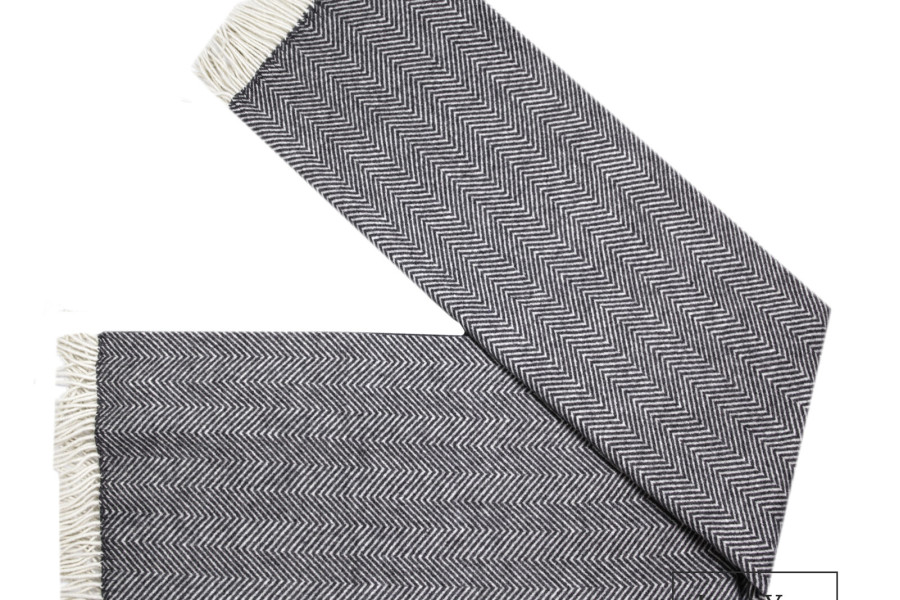
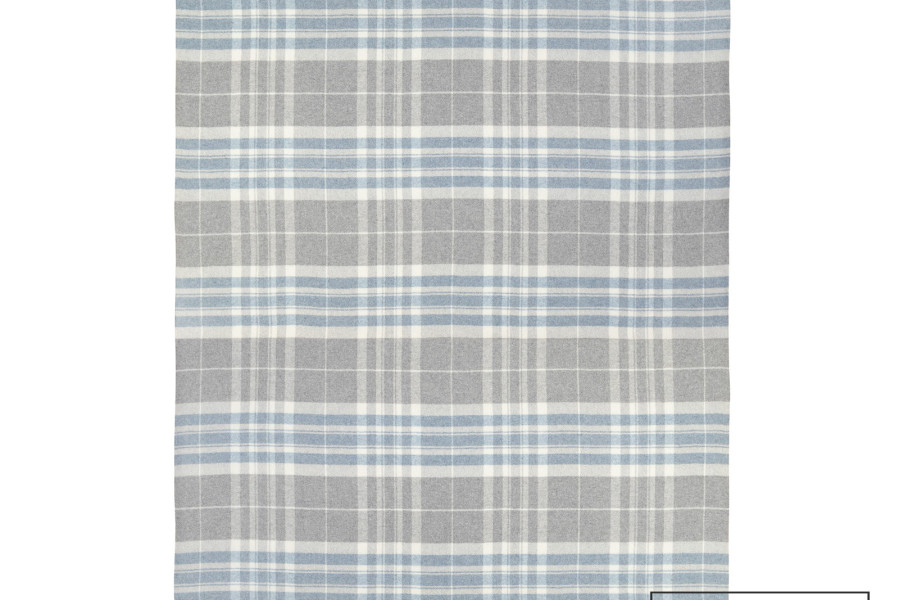
Our merino throws are 80% merino wool and 20% nylon, woven in our own mill in Ukraine, and their label says do not wash. Here is what we recommend instead:
- Air them out outdoors for a few hours, out of direct sun and rain. Fresh air lifts smells and lets the fibers recover.
- Shake and brush them with a soft clothes brush, in the direction of the fibers.
- Blot spills right away with a clean cloth, dab the spot with a little cold water and a drop of wool detergent, then let it dry flat.
- Have them dry cleaned when they need a real clean, by a cleaner used to handling wool.
If you decide to wash one at home anyway, do it only on the wool cycle exactly as described above, and know that it is at your own risk: the label says not to. For a throw that lives on the couch, airing between cleanings is usually all it needs. Our full guide on how to wash a wool blanket covers stains, storage and each material we weave, and every size and color is in our merino throws collection.
FAQ
Can you put a wool blanket in the washing machine?
Only if the care label allows machine washing. Then use the wool cycle, cold water up to 86 °F (30 °C), a wool detergent and a low spin.
Can you put a wool blanket in the dryer?
Not unless the label says so. Heat and tumbling felt wool, so dry it flat instead.
How often should you wash a wool blanket?
Rarely. Wool resists dirt and smells, so regular airing keeps it fresh. Wash it, or have it cleaned, only when it is visibly dirty or still smells after airing.
Can a felted wool blanket be fixed?
Not really. A conditioner soak can win back size lost when the yarns relaxed and drew in, but felted fibers stay locked together.