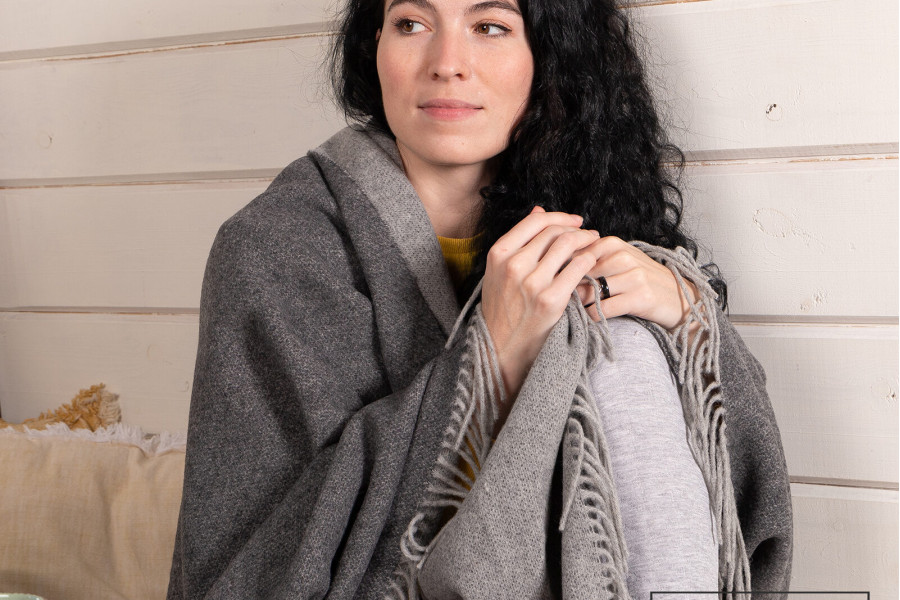
Usually not. Merino fibers are much finer than ordinary sheep's wool, typically about 17 to 24 microns (thousandths of a millimeter) thick, and fibers that fine bend when they press against your skin instead of poking it. The prickle people call itchy wool comes mostly from coarse fibers, roughly 30 microns and up, which stay stiff. That is why most people can wear merino right next to the skin, while a coarse wool sweater prickles.
Some people still feel a slight tickle from merino, mostly on the neck and face, and a new blanket can feel crisper at first than it will later. If a wool blanket feels scratchy, check the care label. Washable wool softens with a lukewarm soak and a little hair conditioner. For wool labeled "do not wash", like our merino throws, airing, shaking out and time help, and a sheet or your clothes between you and the wool take care of the rest.
Why some wool prickles and merino usually doesn't
Wool is made of keratin, the same protein as your hair. What you feel on your skin depends mostly on how thick each fiber is. Countless fiber ends stick out of the surface of any wool yarn. A fine fiber end buckles under the slightest pressure; a thick one stays stiff and presses into the skin, and your nerve endings register that as prickle. The more coarse fibers a fabric contains, the more it prickles.
| Fiber | Typical thickness | On bare skin |
|---|---|---|
| Cashmere | about 14–19 microns | very soft |
| Merino wool | about 17–24 microns | soft, rarely prickles |
| Wool from many other breeds | often 25 microns or more | crisp, can prickle |
| Human hair | roughly 50–100 microns | for scale |
Other things play a part too: how tightly the yarn is spun, how the fabric is finished and how many loose fiber ends a new blanket still carries from weaving. But fineness is the main reason merino feels soft and coarse wool does not.
Who notices it more
- People with more sensitive skin feel prickle from fibers that others don't notice at all.
- Thin skin notices first. The neck, face and inner arms are where most people feel wool. Over jeans or a sweatshirt, hardly anyone feels a wool throw.
- Rubbing makes it worse. A sweater collar moves against your neck all day; a throw mostly rests on top of you. In bed, the top edge near your chin is the spot to watch.
- A brand-new blanket carries more loose fiber ends on its surface than one that has been used and aired for a while.
If your skin reacts to wool of any kind, keep a layer of cotton between you and the throw. Plenty of people use wool that way, and it still keeps them warm.
How soft are our throws?
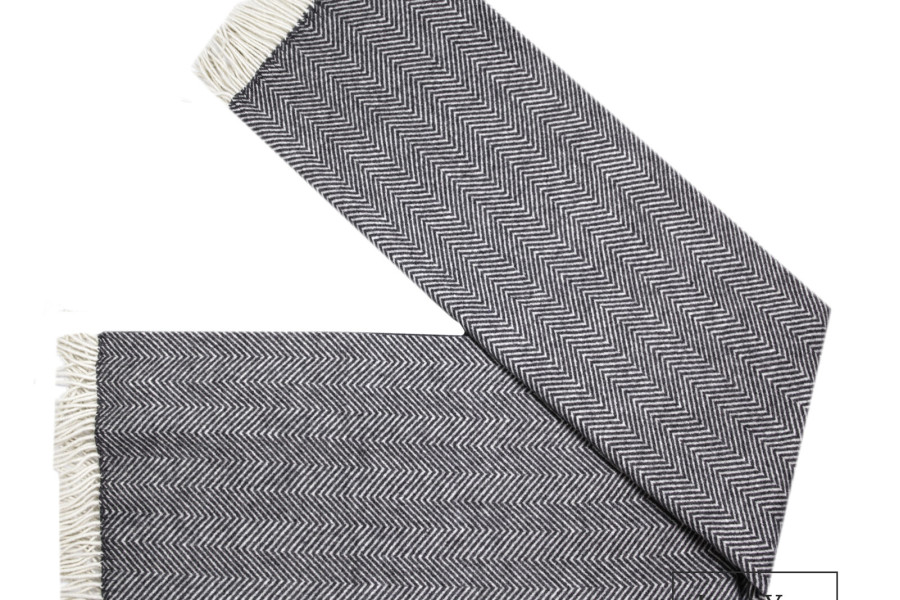
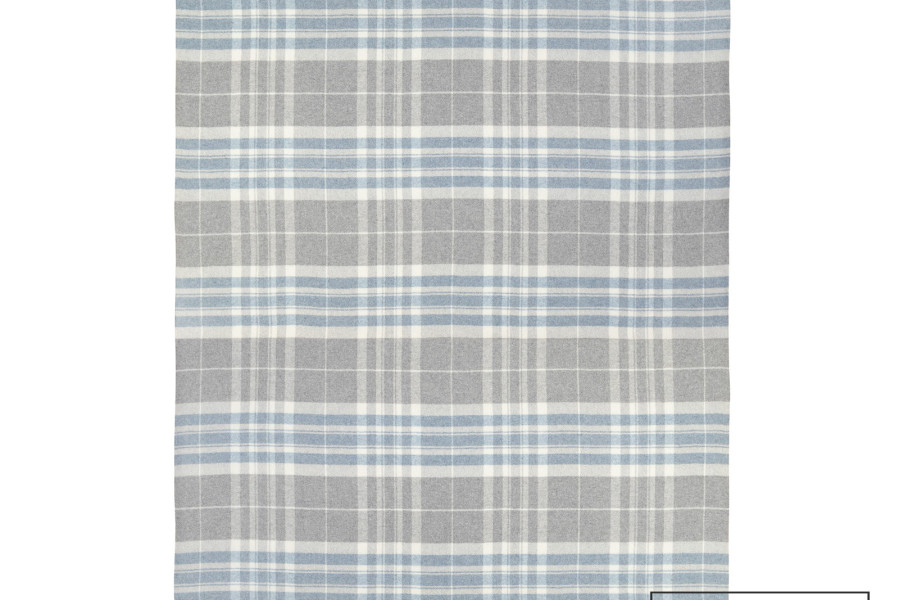
We rate our throws on our own 5-point scale. The merino throws are the ones in stock in the US right now; the other lines are sold out at the moment and appear here for comparison.
| Throw | Composition | Softness | Warmth |
|---|---|---|---|
| Cashmere-merino | 90% merino wool, 10% cashmere | 5/5 | 4/5 |
| Merino | 80% merino wool, 20% nylon | 4/5 | 4/5 |
| Cotton-blend | 50% cotton, 30% polyester, 20% acrylic | 4/5 | 3/5 |
| Pure new wool | 100% New Zealand wool | 3/5 | 5/5 |
Our pure new wool is the warmest of the four, but its fiber is coarser and can feel scratchy on bare skin, so it works well over clothes or bedding. For use against the skin, choose our merino wool throws. They come in three sizes, from 51 × 67 in (130 × 170 cm) to 59 × 85 in (150 × 215 cm), from $49.90, with free shipping across the US and 30-day returns.
How to soften a scratchy wool blanket (washable wool only)
This works for wool blankets whose care label allows hand washing. Hair conditioner is made to smooth keratin, and it smooths wool fibers the same way it smooths hair.
- Fill a tub or a large basin with lukewarm water, no warmer than 86 °F (30 °C).
- Stir in a tablespoon or two of hair conditioner until it dissolves.
- Put the blanket in and press it gently under the water. Do not rub or wring it.
- Let it soak for about 15 minutes.
- Drain the tub and rinse the blanket in fresh water of the same temperature. A sudden change from warm to cold can felt wool.
- Press out the water, roll the blanket in a large towel and press again.
- Dry it flat on a rack or on towels, away from radiators, heat vents and direct sun, and ease it back into shape. Keep it out of the dryer unless the label clearly allows it.
Every wash carries some risk for wool, because heat, friction and changes in temperature make it felt and shrink. Our guide on how to wash a wool blanket explains the care label symbols and the gentlest way to do it.
Our merino throws say "do not wash": what helps instead
The care label on our merino throws says do not wash: air them outdoors for a few hours, out of direct sun and rain, or have them dry cleaned (solvent P). A conditioner soak is still a wash, so it is not for them. What helps instead:
- Shake it out. A firm shake outdoors removes loose fibers left from weaving and finishing.
- Air it. Hang it outdoors for a few hours on a dry day, in the shade. Airing freshens the wool and lets the fibers lift.
- Brush it lightly. A soft clothes brush, used in the direction of the fibers, lifts off fluff.
- Give it time. A throw that is used and aired regularly often feels softer after the first weeks than it did out of the package.
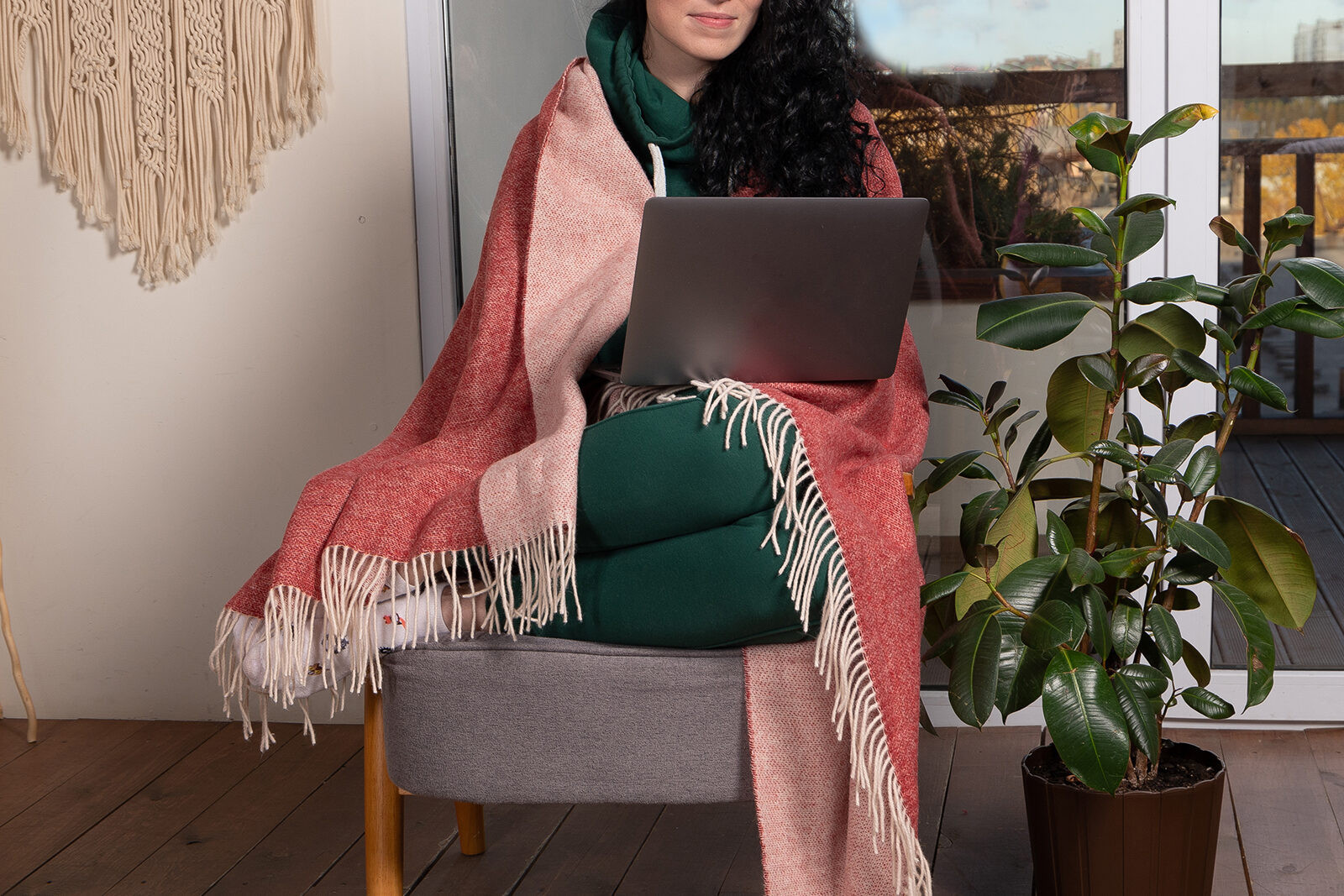
- Layer it. In bed, fold the top sheet back over the upper edge of the throw so the wool doesn't touch your neck or chin. On the couch, pull it over your clothes rather than bare skin.
If you decide to wash a "do not wash" throw anyway, you do so at your own risk; the washing guide above shows how to keep that risk as low as possible.
FAQ
Is merino wool itchy?
Rarely. Its fibers are fine enough to bend against the skin instead of prickling. People with sensitive skin may feel a light tickle on the neck or face.
Is cashmere softer than merino?
Yes, cashmere fibers are usually finer still. Our cashmere-merino throws (90% merino wool, 10% cashmere) rate 5 out of 5 for softness, but they are sold out in the US at the moment.
Does a wool blanket get softer over time?
Often a little. Loose fiber ends come away in the first weeks, and airing and regular use relax the surface. A coarse wool will never feel like merino, though.
Can I put a wool blanket in the dryer to soften it?
No. Heat and tumbling make wool felt and shrink. Dry washable wool flat, and air a "do not wash" throw instead.
Why does my new wool throw shed?
New throws carry loose fibers from weaving and finishing. Shake it out and brush it lightly; the shedding usually eases with use.