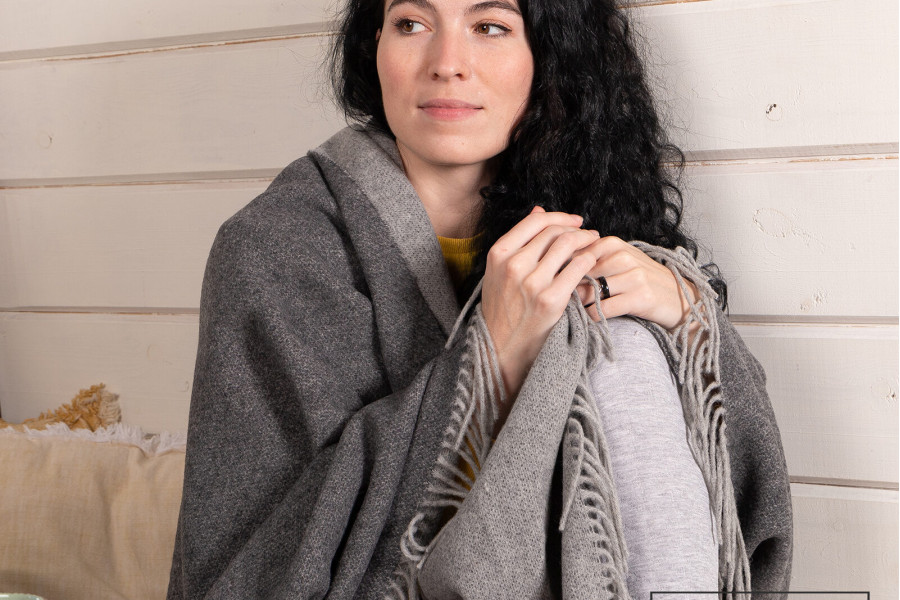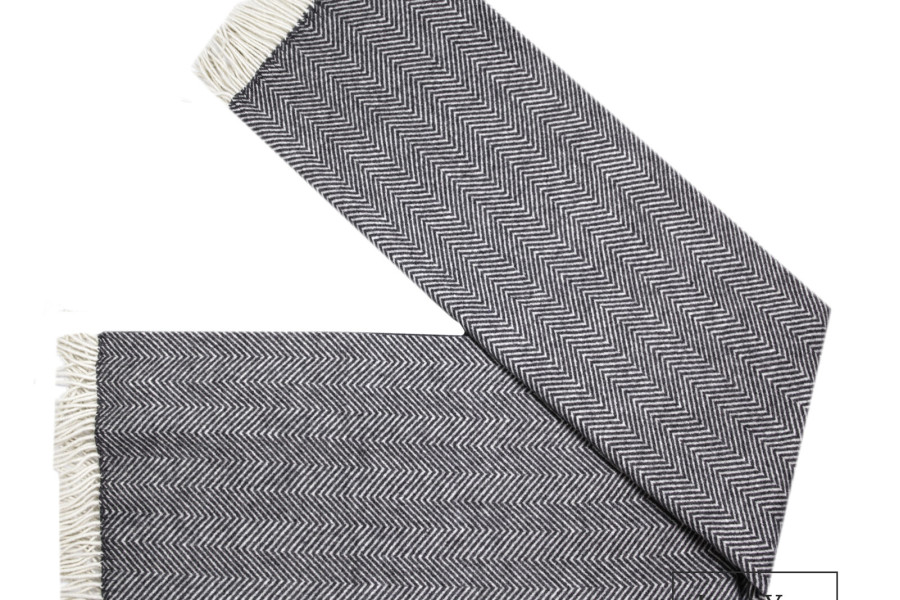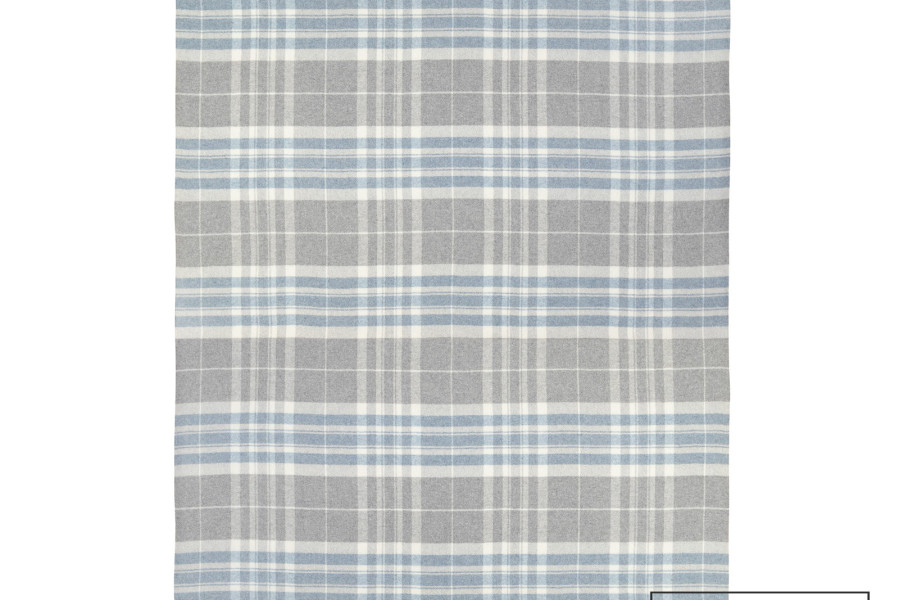
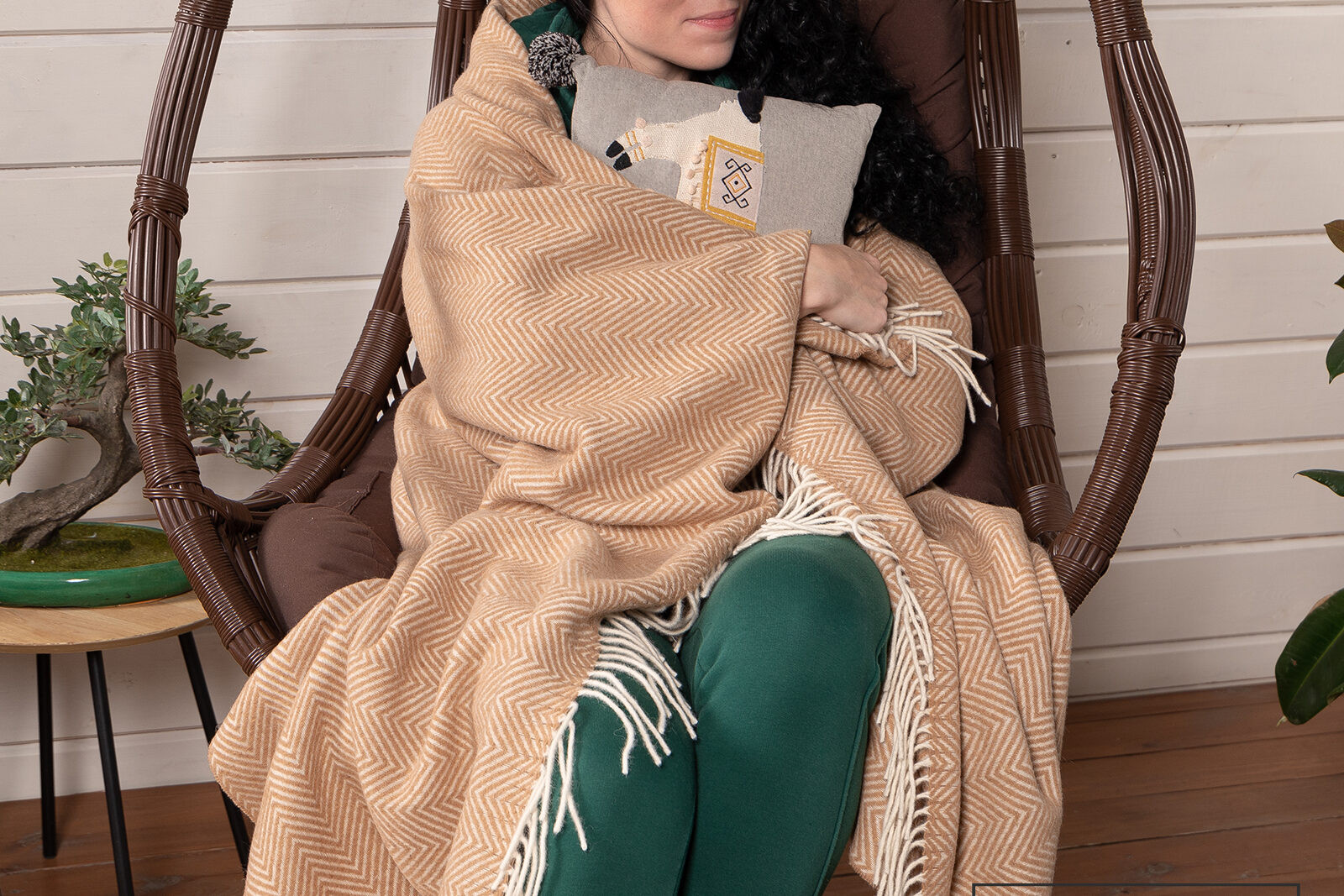
We blend our merino with 20% nylon because nylon makes the yarn stronger and helps the finished throw keep its shape, while the merino, four-fifths of the fiber, gives the warmth and softness you buy a wool throw for. Merino feels soft because its fibers are fine, and fine fibers are also the more delicate ones. Spun together with nylon, the yarn is tougher, which matters on a couch, where a throw gets pulled, sat on and folded every day.
The trade-off is small and easy to state. Nylon adds strength rather than warmth, and it absorbs much less moisture than wool, so the throw's warmth and comfort come from its merino and from how densely it's woven. The blend also helps keep the price down: our merino throws cost $49.90 to $69.90. The care routine is the same as for any of our wool throws: the label says do not wash, so you air the throw and have it dry cleaned when it needs it.
What each fiber does
| Merino wool (80%) | Nylon (20%) | |
|---|---|---|
| What it is | Fine wool from merino sheep | A synthetic fiber, often labeled polyamide in Europe |
| What it brings | Warmth, softness, drape | Strength, resistance to rubbing, shape retention |
| Moisture | Takes up moisture vapor without feeling damp | Absorbs much less than wool |
| Its weak spot | Fine fibers are delicate on their own | Less warm and less absorbent than wool |
The merino does the comfort work. Its fine, crimped fibers trap still air, which is what keeps you warm, and they bend when they touch your skin instead of prickling, which is why merino feels soft. Like all wool, it takes moisture vapor into the fiber without feeling clammy, and it resists odors, so an airing usually freshens it up.
The nylon is the reinforcement. It's strong for its weight, stands up to rubbing and recovers well after being stretched. In a blended yarn, the nylon fibers share the load when the yarn is pulled, so it breaks less easily, and they help the fabric spring back after it's been stretched over knees and shoulders. It's the same reason many wool socks contain nylon.
Why a blend and not pure merino
Throws woven from merino alone exist, but fine merino on its own is more delicate and costs more. Twenty percent nylon is our balance: enough to reinforce the yarn, while the throw stays four-fifths merino and behaves like wool. It's warm, it breathes and it stays fresh between cleanings. We rate the line 4 out of 5 for both softness and warmth on our own scale.
A blend doesn't stop a throw from pilling. Any soft throw can form small balls of fiber where it rubs, on an armrest or where you usually sit. With nylon in the yarn, those balls tend to stay anchored instead of dropping off, so remove them now and then with a wool comb or a fabric shaver. It takes a few minutes and leaves the surface smooth again.
We also weave throws without nylon: a cashmere-merino blend (90% merino wool, 10% cashmere) and pure new wool (100% New Zealand wool). How the three wools compare in softness, warmth and price is in our guide to merino, cashmere and pure new wool. In the US, merino is the line in stock right now.
How blends are labeled in the US
US law requires a textile label to name the fibers by their generic names and give each one's share of the total fiber weight, largest share first. So "80% merino wool, 20% nylon" means that of every pound of fiber in the throw, 0.8 lb is merino and 0.2 lb is nylon. In our 55 × 79 in (140 × 200 cm) throw, which weighs 730 g (about 1.6 lb), that's roughly 580 g of merino and 150 g of nylon.
A few things to keep in mind when you read a label:
- Weight, not looks: the percentages describe the weight of each fiber, not how much of the surface it covers.
- Nylon or polyamide: US labels say nylon; European labels often say polyamide. It's the same family of fibers.
- The name isn't the content: products called a "merino blend" or a "wool blend" can contain very different amounts of wool. The percentages are what count.
- Country of origin: the label also names the country where the product was made. Ours says Ukraine, where our throws are woven in our family's own mill.
What the blend means for price
Merino is the costly part of a wool throw, and nylon costs less. Replacing a fifth of the merino with nylon lowers the cost of the yarn, which is part of why our merino throws come in at $49.90 to $69.90, depending on size:
- 51 × 67 in (130 × 170 cm), double-sided, 890 g (about 2 lb)
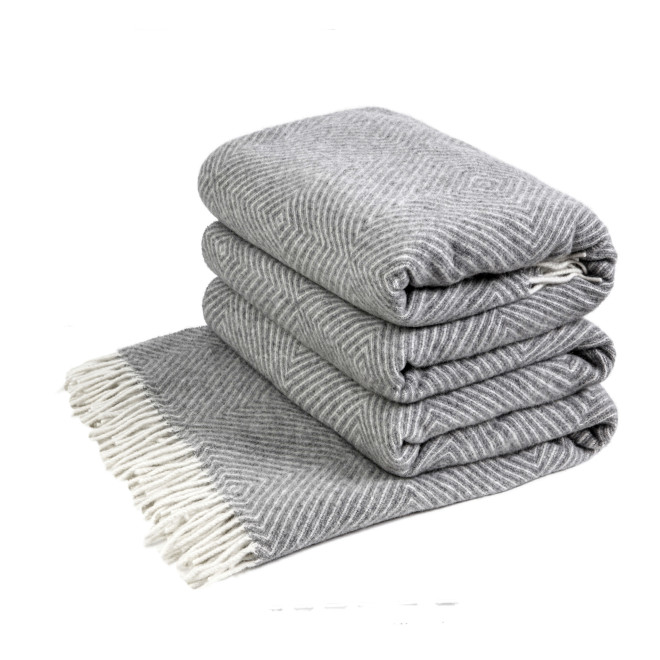
- 55 × 79 in (140 × 200 cm) including fringes, 730 g (about 1.6 lb), in patterns such as chevron, diamonds and stripes
- 59 × 85 in (150 × 215 cm), double-sided, 1,450 g (about 3.2 lb)
Shipping is free across the US from our warehouse in New Jersey. The sizes and colors in stock are on our merino throws page.
Caring for a merino-nylon throw
The nylon doesn't change the care label. Like all our wool throws, our merino throws say do not wash. Wool freshens up in the open air, so most of the time this is all the care they need:
- Air the throw outdoors for a few hours now and then, out of direct sun and rain.
- Shake it out and brush it with a soft clothes brush, along the fibers.
- Blot spills right away with a clean cloth; don't rub.
- Comb off pills on well-used spots.
- When it needs a real clean, take it to a dry cleaner. The circle with a P on the label tells the cleaner which solvents are safe for it.
Some owners wash wool throws at home on a wool cycle anyway. With a throw labeled do not wash, that's at your own risk; if you decide to try, our guide on how to wash a wool blanket explains how to go about it as gently as possible.
FAQ
Is nylon bad in a wool blanket?
No. In a moderate share it strengthens the yarn and helps the blanket keep its shape. What matters is the amount: at 20%, our throws are still four-fifths merino.
Does nylon make a wool throw less warm?
Nylon adds strength rather than warmth, so a blend's warmth comes mainly from its wool and from how densely it's woven. We rate our merino throws 4 out of 5 for warmth on our own scale.
Can you put a merino-nylon throw in the washing machine?
Not ours: the label says do not wash. Air it regularly and have it dry cleaned when needed.
Is a merino-nylon throw itchy?
Merino is a fine wool, so it's much less likely to feel scratchy than coarser wool. We rate our merino throws 4 out of 5 for softness on our own scale.